OUTDOOR APPLICATION

Defy the Elements.

Ensuring Ultimate weather protection and breathable comfort for extreme outdoor environments.

Discover Solutions

Outdoor Insights.

Deep dives into the science of high-performance waterproof and breathable membranes for extreme environments.

What Makes a Breathable Film Reliable in Real Production

See what actually determines breathable film production reliability: thickness control, lamination, and converting speed all...

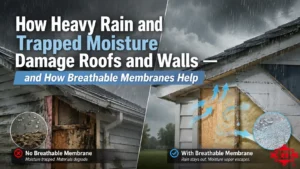
How Heavy Rain and Trapped Moisture Damage Roofs and Walls — and How Breathable Membranes Help

Heavy rain can leave moisture trapped inside roofs and walls even after the surface looks...

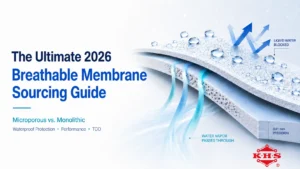
The Ultimate 2026 Breathable Membrane Sourcing Guide

A B2B sourcing guide comparing microporous (MicroBreath™) and monolithic (AquaVene™) breathable membranes—covering MVTR, hydrostatic head,...

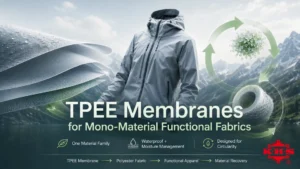
TPEE Membranes for Mono-Material Functional Fabrics

How TPEE moisture-permeable membranes support mono-material, more recyclable outdoor fabrics—combining waterproof protection, moisture vapor transmission,...

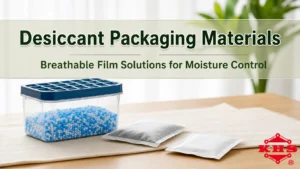
Desiccant Packaging Materials | Breathable Film Solutions

How breathable laminated films control vapor and airflow for desiccant sachets, deodorant packs, and hand...

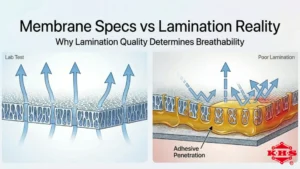
Beyond Membrane Specs: Why Lamination Quality is the True Game Changer

Why a top-tier MVTR spec can still fail after lamination, and how Kae Hwa’s in-line...

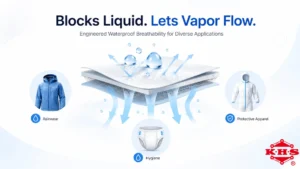
“Breathable” Does Not Mean “Leaky”: How Waterproof Breathable Membranes Work and How to Choose the Right One

Why breathable does not mean leaky: how microporous and monolithic waterproof membranes work, and how...

Rethinking Waterproofing: The Thermodynamic Power of Microporous Membranes

The physics behind microporous membranes: how pore sizes of 0.1–10 μm block liquid water yet...

FAQ.

Find answers to commonly asked questions about our technology.

LiteShell™ uses advanced in-line hot lamination that is completely solvent-free. This not only makes the production more eco-friendly but also results in a softer, quieter fabric that lacks the “crinkly” plastic feel and smell often associated with cheaper laminates.

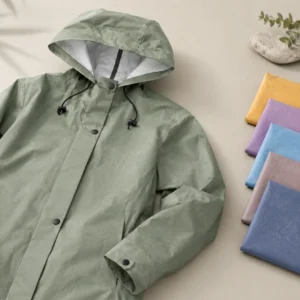
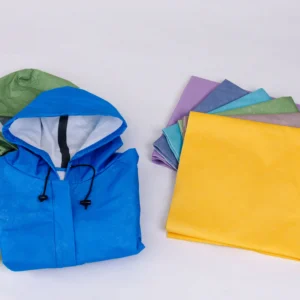
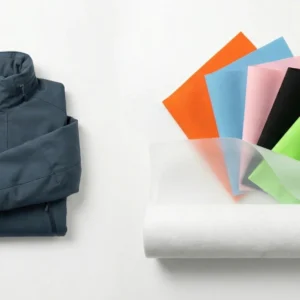
Yes. We offer extensive customization options, including the choice of film (Microporous PE/PP or Monolithic PU), base fabric types (nonwoven or stretchable textiles), custom colors, and specialized pattern printing to align with your brand’s aesthetic.

By integrating AquaVene™ or MicroBreath™ membranes, the fabric achieves a high moisture vapor transmission rate ($6,000–7,000 g/m^2 cdot 24hr$), allowing heat and sweat to escape while remaining 100% liquid-impermeable.

Absolutely. LiteShell™ is engineered for high compatibility with standard cut-and-sew operations as well as technical bonding and seam-taping, ensuring a fully waterproof finished garment.

By utilizing high-performance breathable films, LiteShell™ allows moisture vapor (sweat) to escape efficiently while blocking external water and wind. This regulates the wearer’s body temperature, making it ideal for packable hiking jackets and active sportswear.

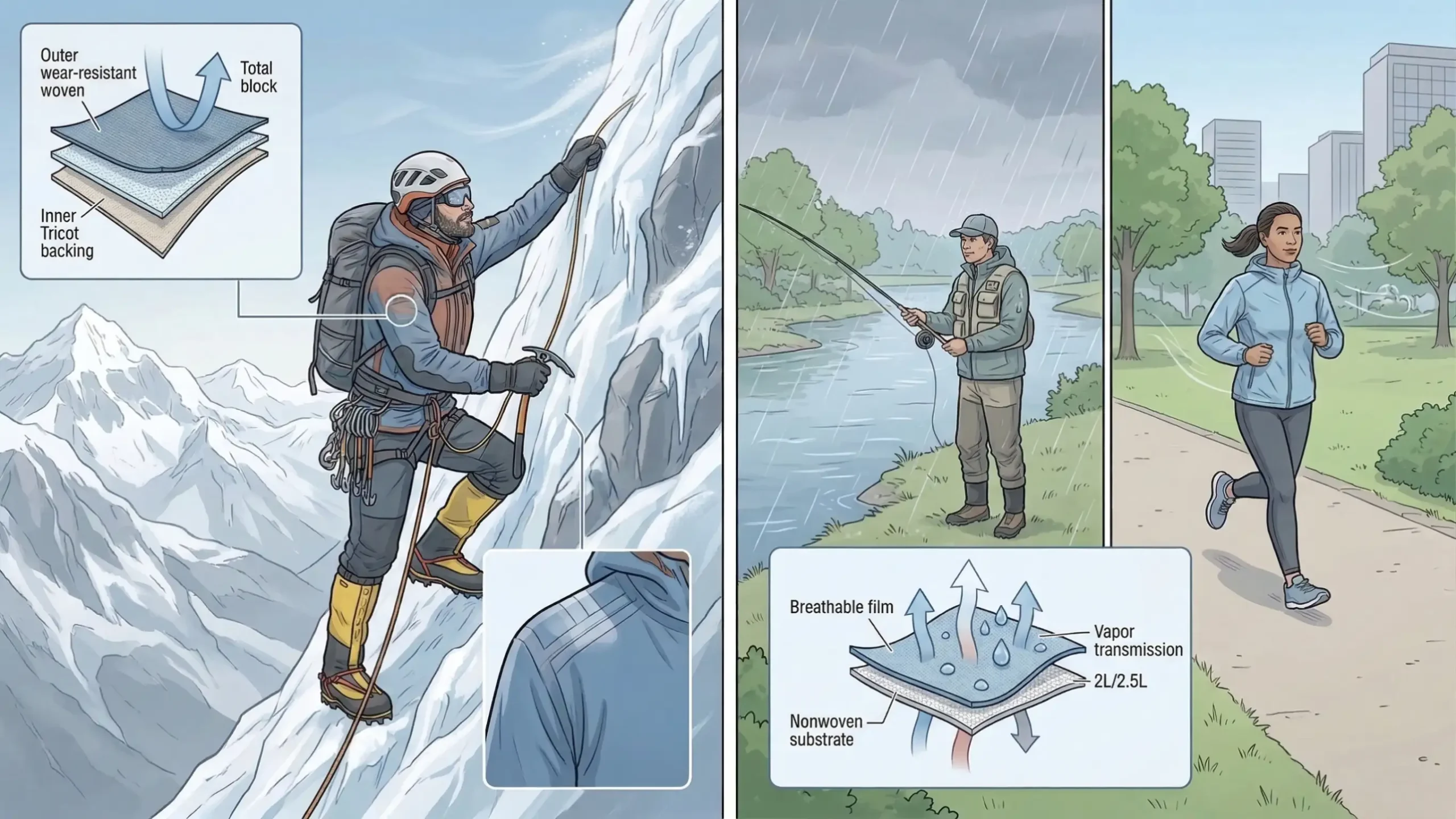
We provide 2-layer (2L), 2.5-layer (2.5L), and 3-layer (3L) composites. This variety allows designers to choose the optimal weight and durability for everything from ultralight windbreakers to heavy-duty professional shell garments.

Yes. ProShell™ is manufactured using a solvent-free hot lamination process. We offer PFC-free (fluorine-free) DWR options and our materials meet GRS (Global Recycled Standard) and ISO 14064-1 carbon verification standards.

Absolutely. The ProShell™ system is designed with UV-stable films and treated woven substrates to prevent material degradation under high-altitude sun exposure, ensuring long-term material integrity.

In our 3L construction, the breathable membrane is sandwiched between a durable outer woven fabric and a soft tricot inner lining. This protects the membrane from both external abrasion and internal body oils, drastically extending the garment’s lifespan and improving next-to-skin comfort.