

What Affects Breathable Film WVTR? Key Factors in Moisture Vapor Transmission
Water Vapor Transmission Rate (WVTR) is one of the most important performance indicators when selecting...
1 Comment
22
Oct
Oct

Structural Integrity in Hygiene Laminate: Balancing Softness and Barrier Performance
Disposable hygiene laminate materials are deceptively complex. A diaper backsheet, sanitary napkin layer, training-pants laminate,...
08
Oct
Oct
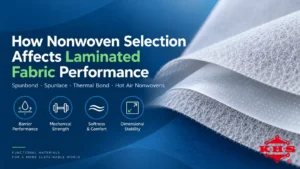
How Nonwoven Selection Affects Laminated Fabric Performance: Spunbond, Spunlace, Thermal Bond & Hot Air Nonwovens
When sourcing waterproof and breathable laminates, buyers often begin with the membrane: GSM, WVTR, hydrostatic...
17
Sep
Sep
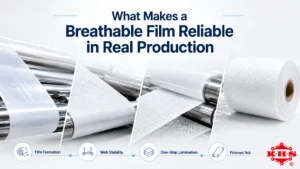
What Makes a Breathable Film Reliable in Real Production
See what actually determines breathable film production reliability: thickness control, lamination, and converting speed all...
03
Sep
Sep
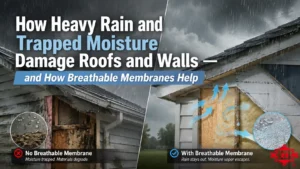
How Heavy Rain and Trapped Moisture Damage Roofs and Walls — and How Breathable Membranes Help
Heavy rain can leave moisture trapped inside roofs and walls even after the surface looks...
21
Aug
Aug
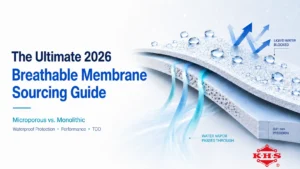
The Ultimate 2026 Breathable Membrane Sourcing Guide
A B2B sourcing guide comparing microporous (MicroBreath™) and monolithic (AquaVene™) breathable membranes—covering MVTR, hydrostatic head,...
15
Jul
Jul

TPEE Membranes for Mono-Material Functional Fabrics
How TPEE moisture-permeable membranes support mono-material, more recyclable outdoor fabrics—combining waterproof protection, moisture vapor transmission,...
10
Jul
Jul

Desiccant Packaging Materials | Breathable Film Solutions
How breathable laminated films control vapor and airflow for desiccant sachets, deodorant packs, and hand...
09
Jul
Jul
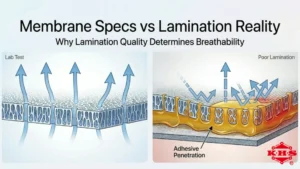
Beyond Membrane Specs: Why Lamination Quality is the True Game Changer
Why a top-tier MVTR spec can still fail after lamination, and how Kae Hwa’s in-line...
30
Jun
Jun
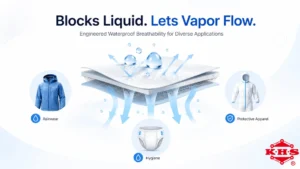
“Breathable” Does Not Mean “Leaky”: How Waterproof Breathable Membranes Work and How to Choose the Right One
Why breathable does not mean leaky: how microporous and monolithic waterproof membranes work, and how...
20
May
May
- 1
- 2