“Breathable” Does Not Mean “Leaky”: How Waterproof Breathable Membranes Work and How to Choose the Right One
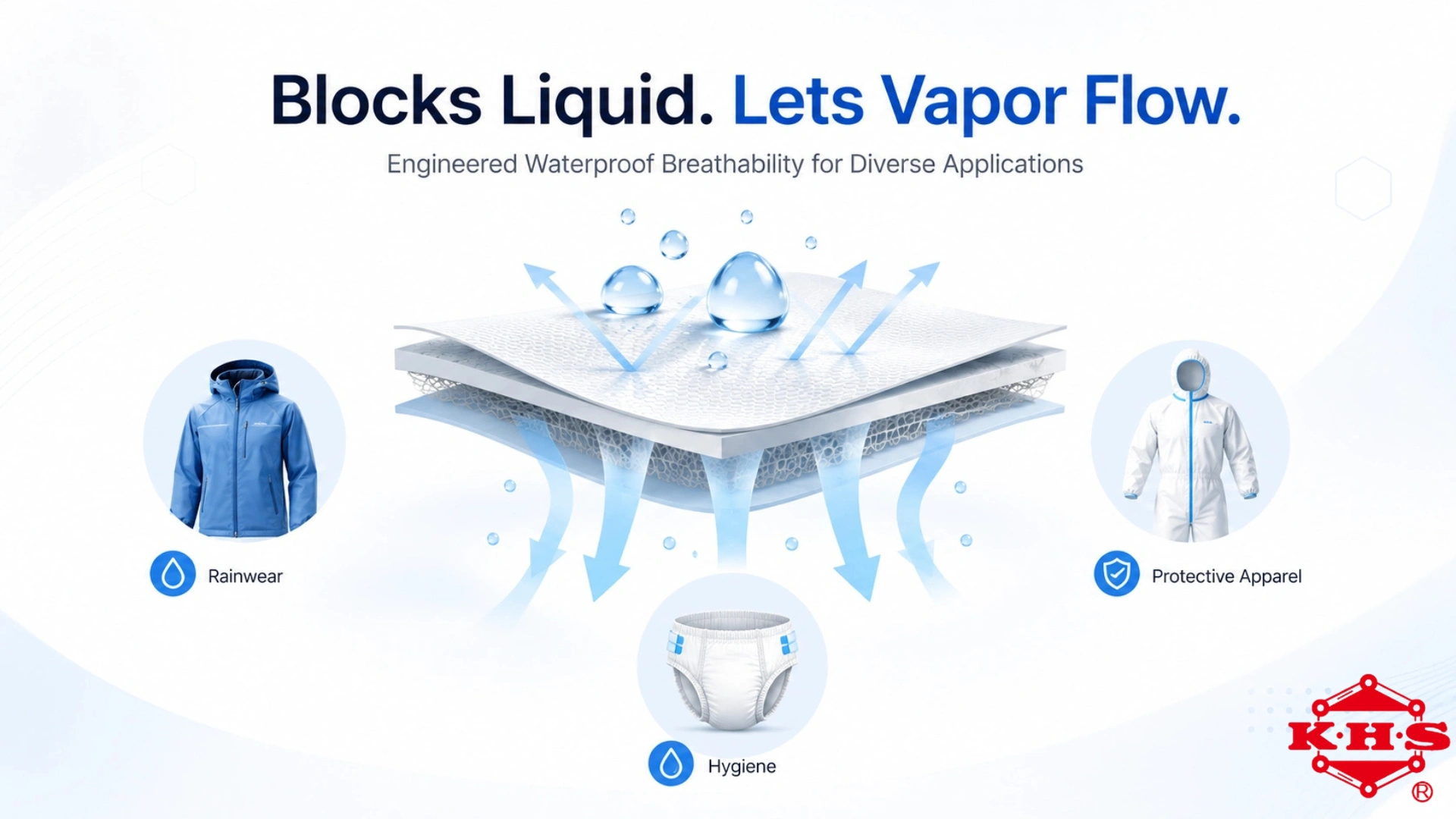
A waterproof breathable membrane blocks liquid water while still letting water vapor escape, because vapor molecules are far smaller than liquid water droplets. Microporous membranes use tiny pores sized to block liquid but pass vapor, while monolithic membranes use hydrophilic polymer chemistry to move vapor without any physical pores at all. The right choice between these two technologies depends on the specific application—hygiene, medical, industrial, construction, or outdoor apparel.
Why “Breathable” Does Not Mean “Water Will Leak Through”
When people first hear the word breathable, they often assume the material must allow water to pass through. In reality, a well-designed waterproof breathable membrane can allow water vapor to escape while still blocking liquid water from penetrating.
This is why breathable waterproof materials are widely used in baby diapers, adult incontinence products, medical gowns, technical rainwear, outdoor jackets, construction membranes, and industrial protective fabrics.
The key is not simply whether a film is “breathable.” The real question is: what kind of breathability does the product need, and under what conditions must it remain waterproof?
For manufacturers, choosing the right waterproof breathable membrane is not just a material decision. It directly affects comfort, leakage prevention, durability, safety, appearance, and even product positioning.
What Is a Waterproof Breathable Membrane?
A waterproof breathable membrane is a functional film designed to create a selective barrier. It helps prevent liquid water from passing through while allowing moisture vapor, heat, or air to move across the material structure.
In simple terms:
Liquid water is blocked. Moisture vapor can escape.
This performance is made possible through advanced film structures such as microporous membranes or monolithic hydrophilic membranes.
At Kae Hwa Industrial Co., Ltd., waterproof and breathable materials are developed across multiple technologies, including PE, PP, TPEE, and laminated fabric structures for hygiene, medical, industrial, construction, agricultural, packaging, and outdoor applications.
How Can a Film Be Waterproof and Breathable at the Same Time?
Waterproof breathability is possible because liquid water and water vapor behave differently.
Liquid water exists as larger droplets. Water vapor exists as much smaller molecules. A membrane can therefore be engineered to allow vapor transmission while resisting liquid penetration.
There are two common technical approaches:
1. Microporous Waterproof Breathable Membranes
A microporous membrane contains extremely small pores. These pores are typically small enough to resist liquid water, but large enough to allow vapor or air to pass through.
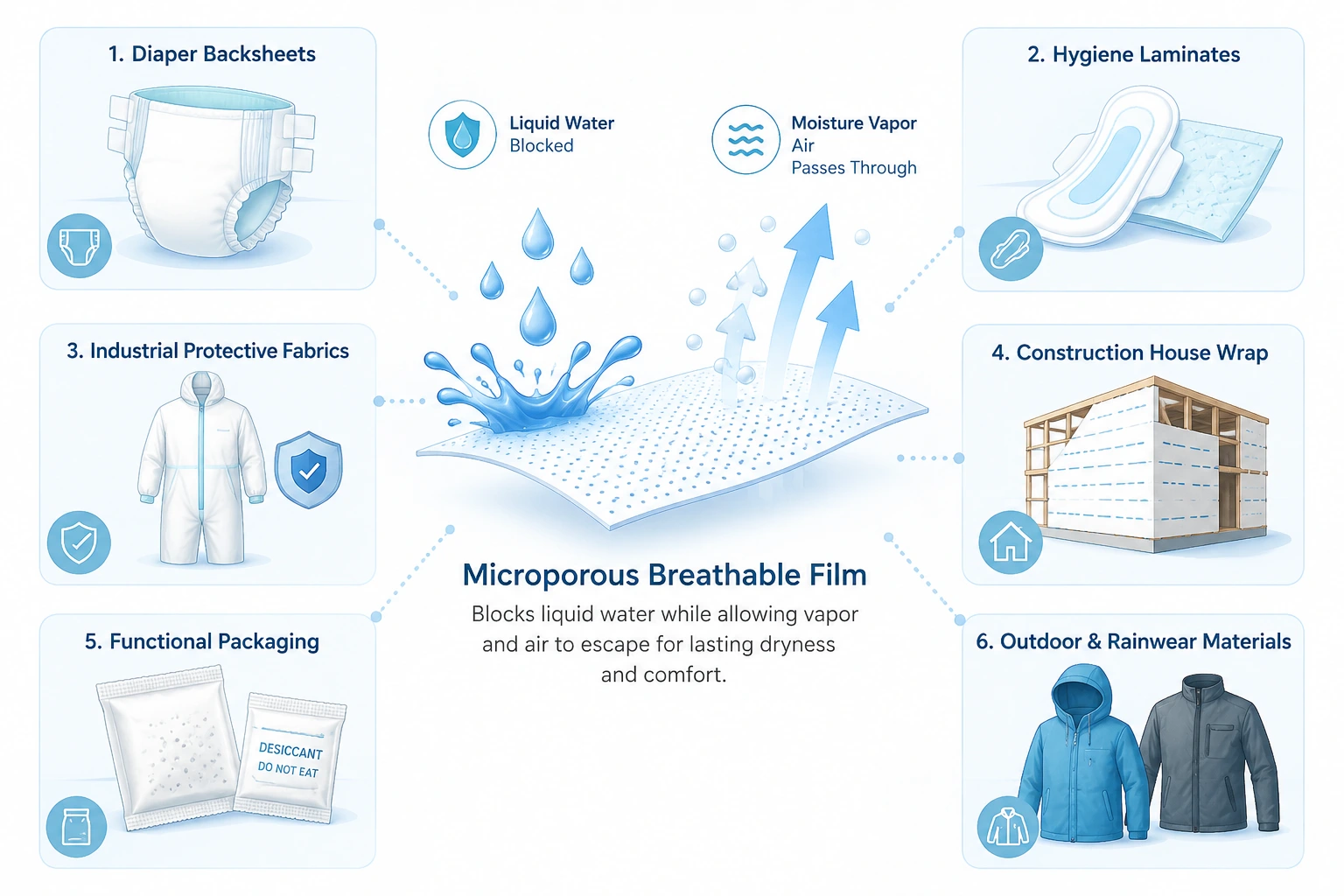
This type of structure is commonly used in:
- Diaper backsheets
- Hygiene laminates
- Industrial protective fabrics
- Construction house wrap
- Functional packaging
- Outdoor and rainwear materials
Kae Hwa’s MicroBreath series, for example, is based on microporous breathable film technology designed to block external water while allowing vapor and air to escape.
2. Monolithic Moisture-Vapor Permeable Membranes
A monolithic membrane does not rely on physical pores. Instead, it uses hydrophilic polymer chemistry to absorb and transport moisture vapor through the film structure.
This type of non-porous film can provide strong liquid impermeability while still enabling moisture-vapor transmission. It is often used in higher-end applications where softness, durability, and stable waterproof performance are important.
Kae Hwa’s AquaVene series uses a non-porous hydrophilic structure to transmit vapor molecules through molecular diffusion while maintaining liquid barrier performance.
Breathable Film vs. Non-Breathable Waterproof Film
Not every waterproof film is breathable. Some applications require complete barrier performance without vapor transmission.
For example, a non-breathable waterproof film may be preferred for packaging, construction isolation layers, or industrial barrier applications where liquid, wind, or vapor must be fully blocked.
Kae Hwa’s HydraProof series is designed as a PE/PP waterproof barrier film for applications requiring non-breathable waterproof integrity, flexibility, and hydrostatic resistance.
This is why material selection should always begin with the end-use scenario. A diaper backsheet, a surgical gown, a rain jacket, and a roofing membrane may all need “waterproof” performance, but the ideal film structure can be very different.
Different Applications Require Different Membrane Selection Logic
Many buyers assume that once a material is waterproof and breathable, it can be used across every product category. In practice, each application has its own performance priorities.
A successful membrane solution must match the product’s real working environment, user expectations, converting process, and required standards.
Hygiene Products: Softness, Dryness, and Leak Protection
For baby diapers, adult diapers, sanitary pads, and underpads, the material must balance leak prevention, skin comfort, softness, and breathability.
In baby diapers, the membrane often needs to be soft, quiet, lightweight, and skin-friendly. Breathability helps reduce stuffiness, while waterproof performance prevents leakage.
For adult incontinence products, users may wear the product for longer periods. This increases the importance of breathability, surface comfort, printing compatibility, and stable laminate strength.
Kae Hwa’s HygieSoft series is designed for hygiene applications such as diaper backsheets, sanitary napkin films, training pants, and underpad laminates, combining microporous film technology with nonwoven lamination for softness and leak protection.
Medical Protection: Barrier Performance Comes First
In medical applications, breathability is important, but it is not always the first priority.
For surgical gowns, isolation gowns, drapes, and medical protective fabrics, the material must meet strict requirements for liquid resistance, blood penetration resistance, viral barrier performance, and garment durability.
In high-risk environments, the membrane or laminate structure may need to resist blood, fluids, bacteria, and virus penetration. In these cases, certified barrier performance is more important than simply maximizing breathability.
Kae Hwa’s breathable viral barrier fabric series has been developed for medical protective applications and tested against standards such as ASTM F1670/F1671 and ISO 16604.
Industrial Protection: Durability, Chemical Resistance, and Wear Comfort
Industrial protective apparel must protect workers from risks such as chemical splashes, dust, powders, biological contamination, and workplace exposure.
Unlike hygiene products, industrial fabrics often require stronger mechanical performance, antistatic properties, seam compatibility, and certified protection levels.
A breathable industrial barrier can improve wearer comfort during long working hours while still maintaining protection against particles or light chemical exposure.
Kae Hwa’s InduBarrier series is designed for industrial environments and supports CE Type 4B/5B/6B, EN 14126, and EN 1149-5 related protection requirements.
Construction Membranes: Long-Term Waterproofing and Moisture Management
Construction membranes follow a completely different logic.
For roofing underlayment, wall wrap, and floor protection, the material must withstand outdoor exposure, wind, rain, mechanical stress, and long-term installation conditions.
A breathable construction membrane should block external water while allowing trapped moisture vapor to escape. This helps reduce condensation risk and supports the long-term health of the building envelope.
Kae Hwa’s BuildBreathe series is designed for roofing, wall, and floor protection applications, combining waterproof resistance with controlled vapor permeability and reinforced lamination.
Outdoor Apparel and Rainwear: Comfort, Appearance, and Performance Balance
In outdoor jackets, rainwear, sportswear, and technical garments, users care about both protection and wearing experience.
A good outdoor laminate should be waterproof, windproof, breathable, lightweight, flexible, and comfortable during movement. Depending on the product positioning, brands may choose microporous or monolithic membranes, 2-layer, 2.5-layer, or 3-layer laminates.
For high-performance outdoor apparel, the membrane must help manage sweat vapor while resisting rain and wind. For lightweight rainwear, flexibility and packability may be more important than extreme durability.
Kae Hwa’s ProShell and LiteShell series are developed for outdoor and functional apparel applications, offering waterproof breathable laminate options for extreme outdoor protection or lightweight outerwear.
Functional Packaging: Controlled Breathability Matters
Breathability is not only used in apparel or hygiene products. It is also valuable in functional packaging.
For desiccant packs, fragrance sachets, deodorizing bags, heat packs, and air-permeable packaging, the material must control vapor, odor, air exchange, sealing performance, and powder leakage.
In this field, “too breathable” or “not breathable enough” can both cause product failure. The film must be engineered for the correct balance of airflow, moisture control, liquid resistance, and sealing strength.
Kae Hwa’s FunPack series is designed for desiccant, fragrance, deodorizing, and heat pack packaging, combining vapor transmission, liquid resistance, and lamination stability.
How to Choose the Right Waterproof Breathable Membrane
The best membrane is not always the one with the highest breathability or the strongest water resistance. The right choice depends on the application.
Before selecting a membrane, manufacturers should consider:
- Application type Hygiene, medical, industrial, outdoor, construction, agriculture, or packaging applications all require different performance balances.
- Required waterproof level Hydrostatic head requirements may vary depending on whether the product faces light moisture, liquid splash, rain pressure, or prolonged water exposure.
- Breathability requirement MVTR, air permeability, and moisture-vapor management should be matched to the user environment and product function.
- Touch and comfort Products that contact the skin, such as diapers, gowns, or apparel, require softer handfeel and better wearing comfort.
- Mechanical strength Tear strength, tensile strength, puncture resistance, and lamination stability are critical for converting and end-use durability.
- Certification requirements Medical and industrial products may require standards such as ASTM, AAMI, CE, EN, ISO, or other market-specific testing.
- Processing compatibility The film must work with printing, embossing, lamination, ultrasonic welding, heat sealing, or garment conversion processes.
- Sustainability goals Recyclable, solvent-free, biodegradable, GRS-certified, or low-emission material options may be important for brand positioning and regulatory needs.
Choosing the Right Membrane Starts with Understanding the Product
Waterproof breathable membranes are not one-size-fits-all materials.
The same concept — allowing vapor to escape while blocking liquid water — can be applied in many different ways. A diaper backsheet needs softness and comfort. A surgical gown needs certified barrier protection. A roofing membrane needs long-term weather resistance. A performance jacket needs waterproof breathability with excellent wearability.
That is why membrane selection should always begin with the product’s real use case.
Kae Hwa Industrial Co., Ltd. develops waterproof breathable films, monolithic membranes, non-breathable barrier films, and laminated fabrics for global brands and OEM manufacturers. With decades of experience in film extrusion, lamination, printing, and material customization, we help customers build the right membrane structure for hygiene, medical, industrial, construction, agricultural, packaging, and outdoor applications.
Explore our product series to find the waterproof breathable membrane solution that fits your application.
👉 Consult with Us for Your Product Application