
How TPEE Moisture-Permeable Membranes Support Mono-Material Functional Fabrics
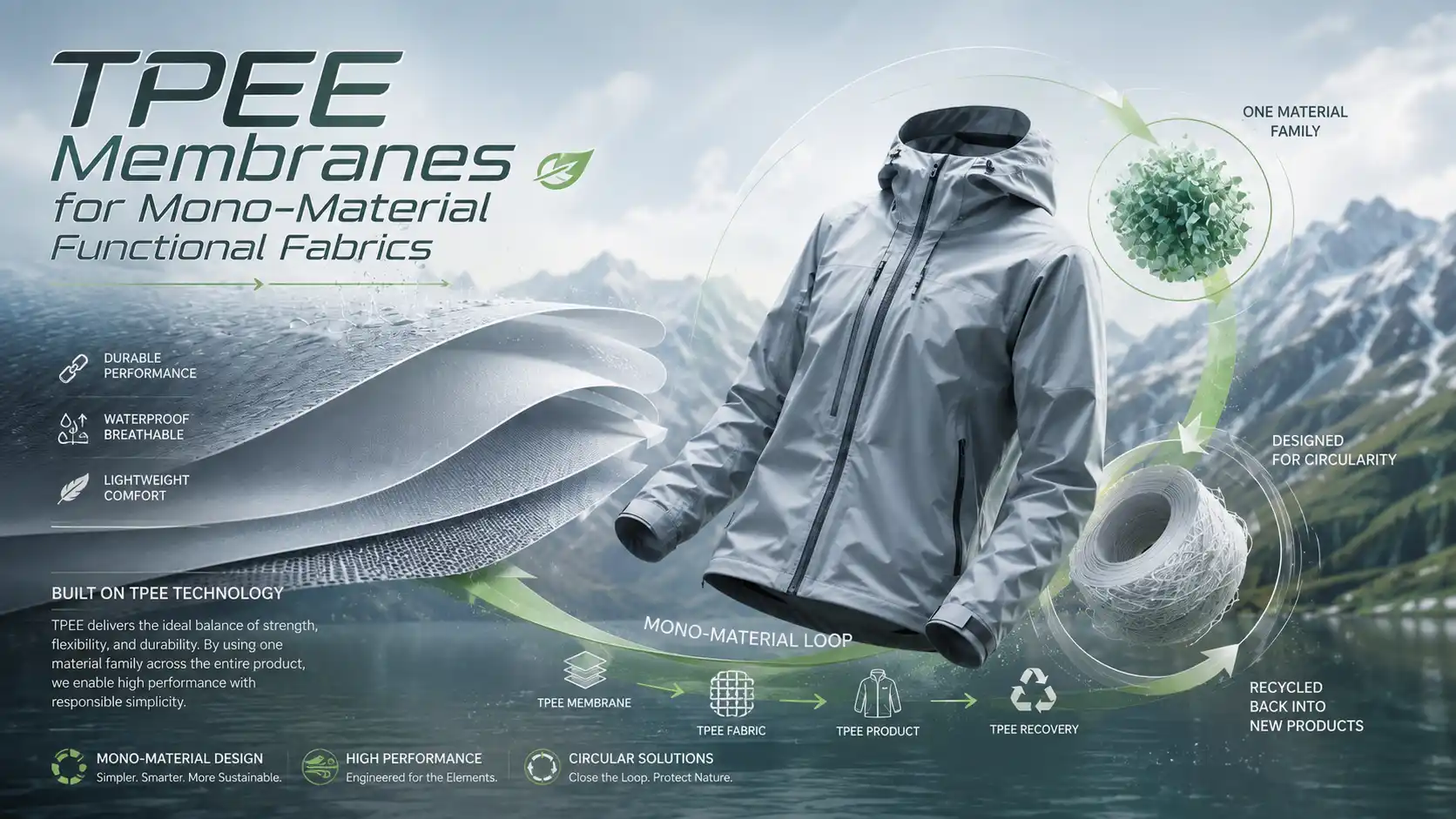
As circular design becomes more important in outdoor apparel, mono-material fabric structures are gaining attention (see What exactly counts as a mono-material functional fabric). TPEE moisture-permeable membranes offer a practical direction by combining waterproof protection, moisture vapor transmission, softness, and polyester-family compatibility. When paired with polyester face fabrics, polyester backings, or recycled polyester textiles, TPEE membranes can help functional laminates move toward more consistent material structures and support future recycling considerations.
The Need for Circular Design in Outdoor Performance Apparel
Outdoor performance apparel is expected to do more than protect the wearer from rain and wind. It must also release moisture vapor, remain comfortable during movement, resist long-term wear, and support the growing demand for lower-impact material design.
For many years, waterproof and moisture-permeable fabrics have relied on multi-layer laminated structures. A typical construction may include a face fabric, a functional membrane, a backing fabric, an adhesive layer, and a surface treatment. While this structure can deliver strong performance, it also creates a challenge at the end of the garment’s life: different material types are difficult to separate and recycle.
As circular design becomes more important in the textile industry, mono-material functional fabrics are gaining attention. Instead of combining unrelated materials, mono-material design focuses on building a fabric structure from materials within the same or compatible polymer family. This approach can help reduce material separation complexity and support future recycling pathways.
For outdoor functional fabrics, TPEE moisture-permeable membranes offer an important material direction.
What Is a TPEE Moisture-Permeable Membrane?
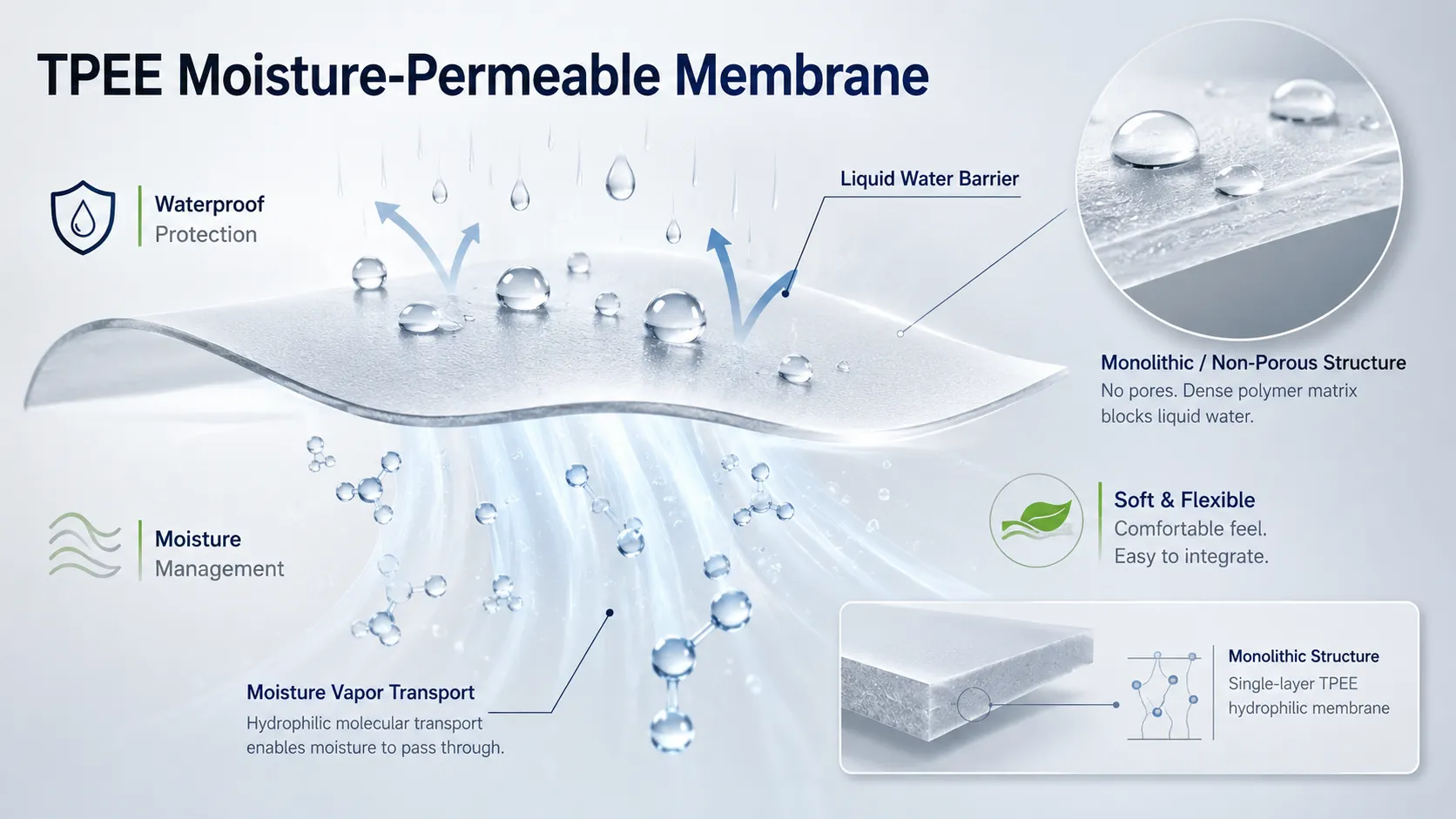
TPEE, or thermoplastic polyester elastomer, is a polyester-based functional polymer known for flexibility, elasticity, thermal stability, and moisture vapor transmission. When engineered into a monolithic moisture-permeable membrane, TPEE can provide reliable waterproof protection while allowing water vapor to pass through the material.
Unlike microporous membranes, which rely on tiny physical pores, monolithic TPEE membranes use hydrophilic molecular movement to transport moisture vapor. Water vapor generated by the body is absorbed, transferred, and released through the membrane structure, while liquid water is blocked from entering from the outside.
This makes TPEE suitable for applications that require waterproof protection, wearing comfort, softness, and durability, such as outdoor jackets, shell garments, footwear components, protective apparel, and technical laminates.
Why Does Mono-Material Design Matter for Functional Fabrics?
Traditional waterproof breathable fabrics often combine several different materials. For example, a fabric may use a nylon face fabric, a PU membrane, a polyester backing, and an adhesive system. This type of structure can perform well, but the mixed-material composition makes recycling more difficult.
Mono-material design aims to solve this issue from the material design stage.
In the case of TPEE membranes, the key advantage is that TPEE belongs to the polyester material family. When paired with polyester face fabrics, polyester backings, or recycled polyester textiles, the overall laminate structure becomes more materially consistent.
This does not automatically mean the finished fabric is fully recyclable in every recycling system. However, it can improve material compatibility for recycling considerations and support a more practical pathway toward circular textile design. For brands developing next-generation outdoor fabrics, this is an important shift: sustainability is no longer only about using recycled content. It is also about designing the fabric structure to be more compatible with future recovery, sorting, and recycling processes.
Waterproof Protection Meets Moisture Management
A key challenge in outdoor apparel is balancing protection and comfort. If a fabric blocks rain but traps body moisture, the wearer can still feel wet, clammy, and uncomfortable. If the fabric releases moisture too easily but lacks water resistance, it may fail under rain, snow, or pressure.
TPEE moisture-permeable membranes help address this balance. The monolithic structure provides a continuous waterproof barrier against liquid water. At the same time, hydrophilic polymer chains allow moisture vapor to move through the membrane. This supports dryness and comfort during hiking, skiing, trekking, cycling, and other outdoor activities where the body generates heat and perspiration.
Supporting Polyester-Based Laminate Structures
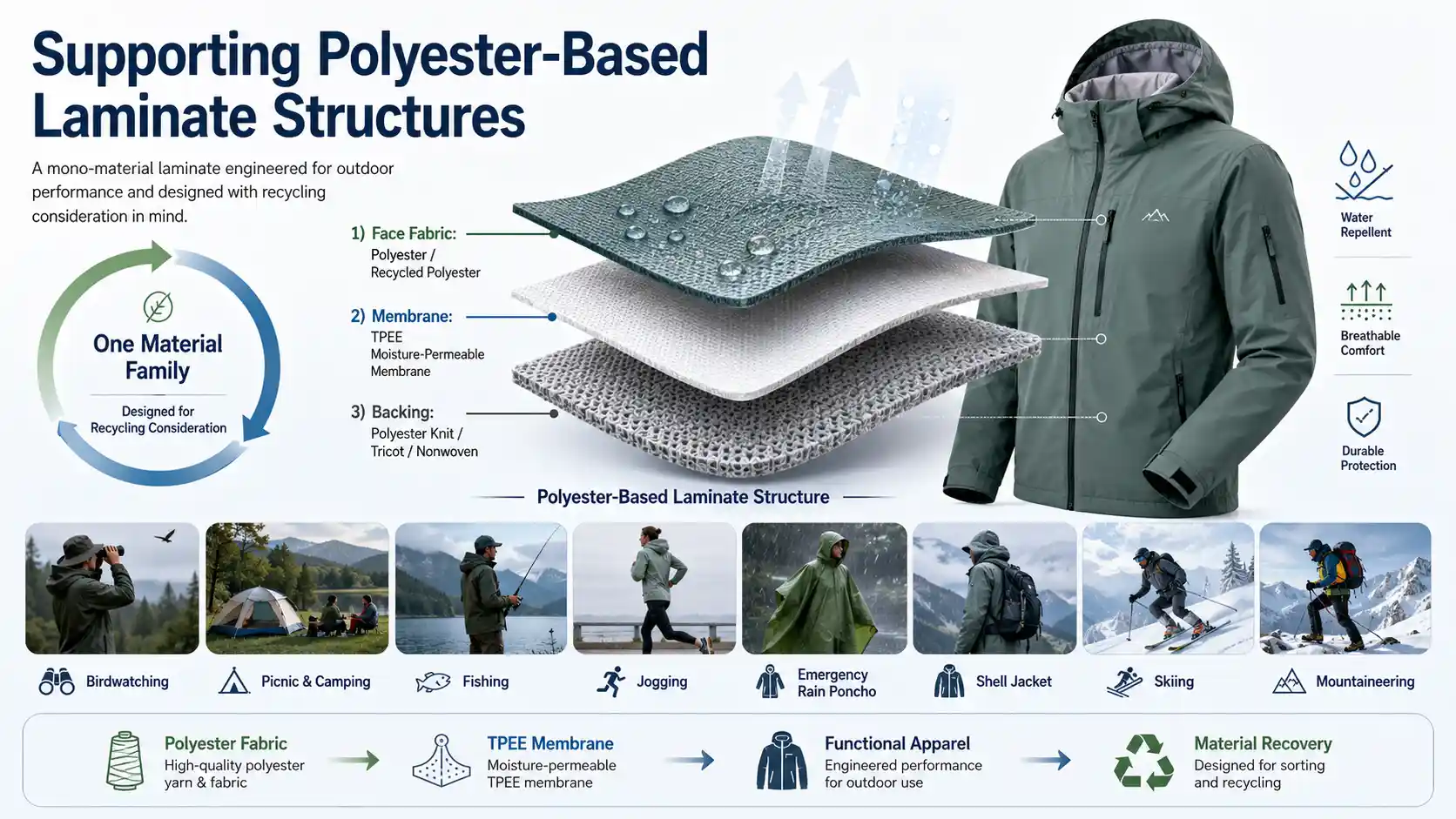
The greatest value of TPEE in mono-material functional fabrics is its compatibility with polyester-based textile systems. A potential material structure may include:
- Face fabric: Polyester or recycled polyester
- Membrane: TPEE moisture-permeable membrane
- Backing fabric: Polyester tricot, polyester knit, or polyester nonwoven
- Lamination process: Solvent-free or low-emission bonding system
This type of structure can support waterproof, moisture-permeable, and wind-resistant performance while keeping the material family more consistent than conventional mixed-material laminates. For outdoor brands, this creates more design flexibility. The same membrane technology can be adapted for different fabric weights, hand feels, and end-use applications.
From Membrane Technology to Outdoor Functional Fabrics
At Kae Hwa Industrial, TPEE moisture-permeable membrane technology is part of our AquaVene™ series—a monolithic hydrophilic waterproof membrane platform designed for moisture vapor transmission, softness, flexibility, and durable protection.
For outdoor textile applications, this technology can be combined with our ProShell™ laminate solutions:
- ProShell™: Engineered for high-performance outdoor protection. By combining functional films with woven fabrics, ProShell™ focuses on high hydrostatic pressure resistance, structural stability, and long-term durability required for mountaineering, skiing, and all-weather shell garments. Learn what sets LiteShell™/ProShell™ apart from traditional laminates. Designed with mono-material recycling potential in mind, a compatible polyester-based structure can support future recycling pathways when the garment eventually reaches the end of its lifespan.
By selecting the right combination of membrane, face fabric, and lamination structure, brands can develop customized waterproof moisture-permeable fabrics designed with mono-material recycling potential in mind.
Sustainability Beyond Material Selection
Mono-material design is only one part of sustainable textile development. The production process also matters.
At Kae Hwa Industrial, solvent-free lamination helps reduce VOC emissions and supports cleaner manufacturing. Recycled polyester fabrics can help lower dependence on virgin materials. Carbon management, material traceability, and certification systems such as GRS or ISO 14064-1 can further strengthen the sustainability profile of functional textile development.
A well-designed waterproof moisture-permeable laminate should consider:
- Material compatibility for recycling consideration
- Moisture vapor transmission & Waterproof performance
- Durability and abrasion resistance
- Softness and wearing comfort
- Clean lamination methods
Explore TPEE Membrane and Laminate Solutions
Contact Kae Hwa Industrial to discuss TPEE membrane options, polyester-based laminate structures, and customized outdoor fabric development for your brand.