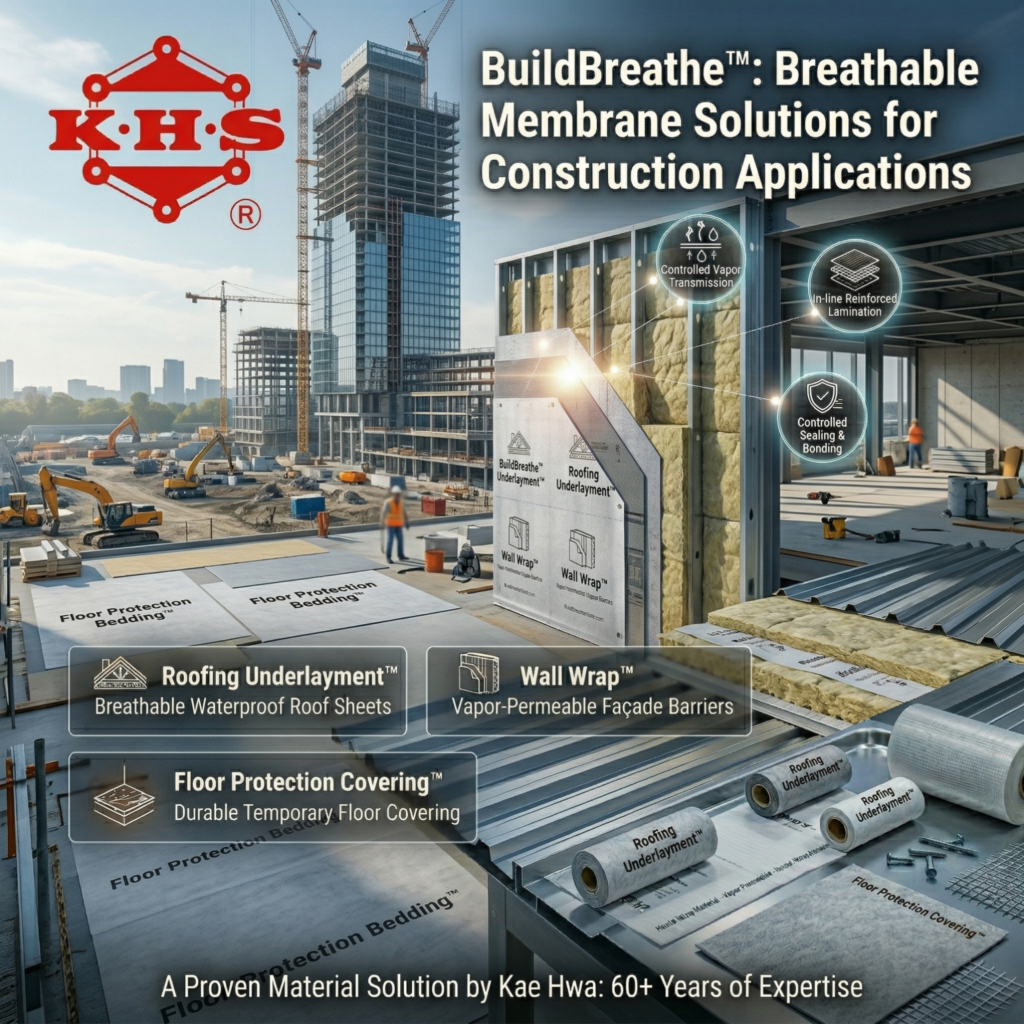
BuildBreathe™ Wall & Facade Wrap – Advanced Weather Barrier for Building Envelopes
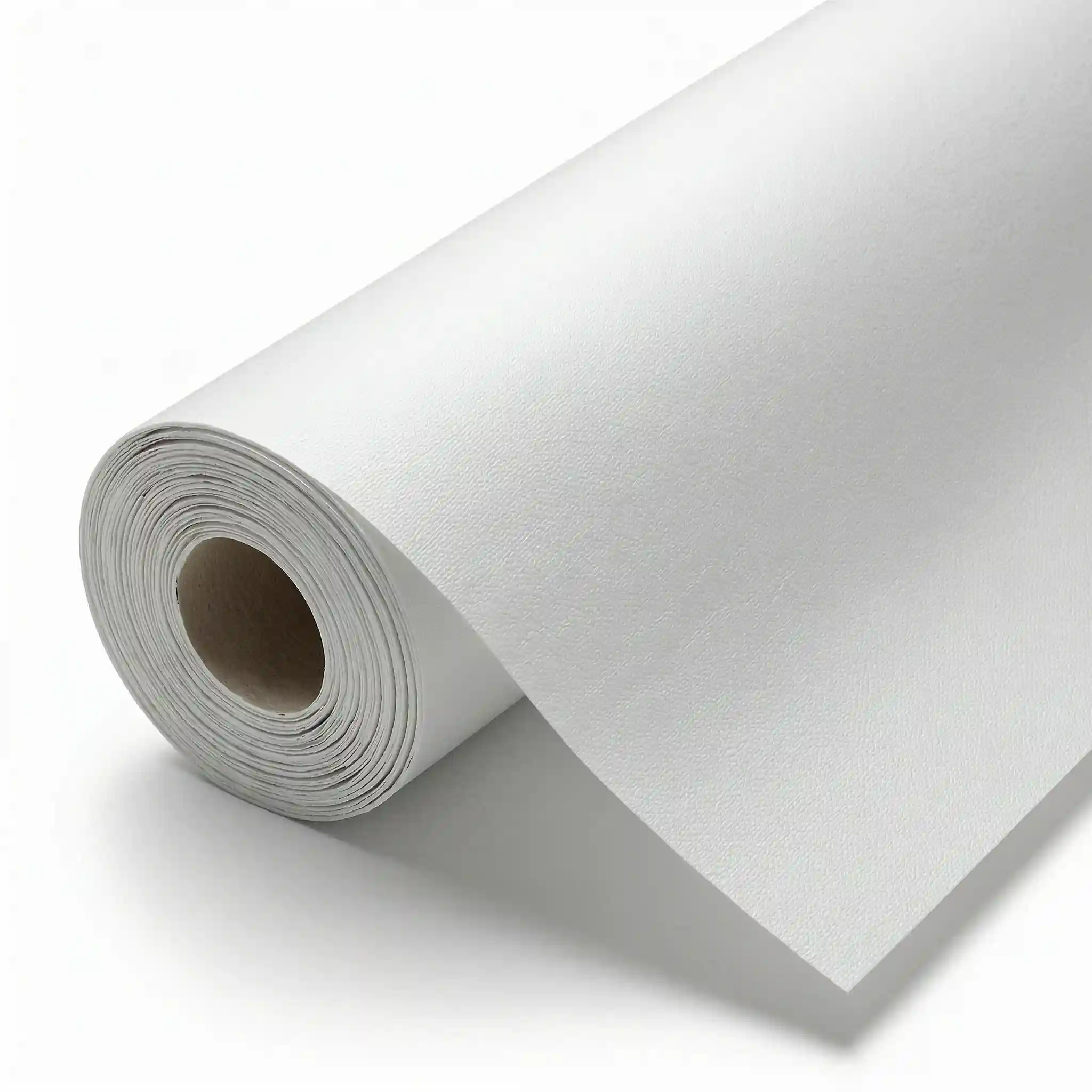
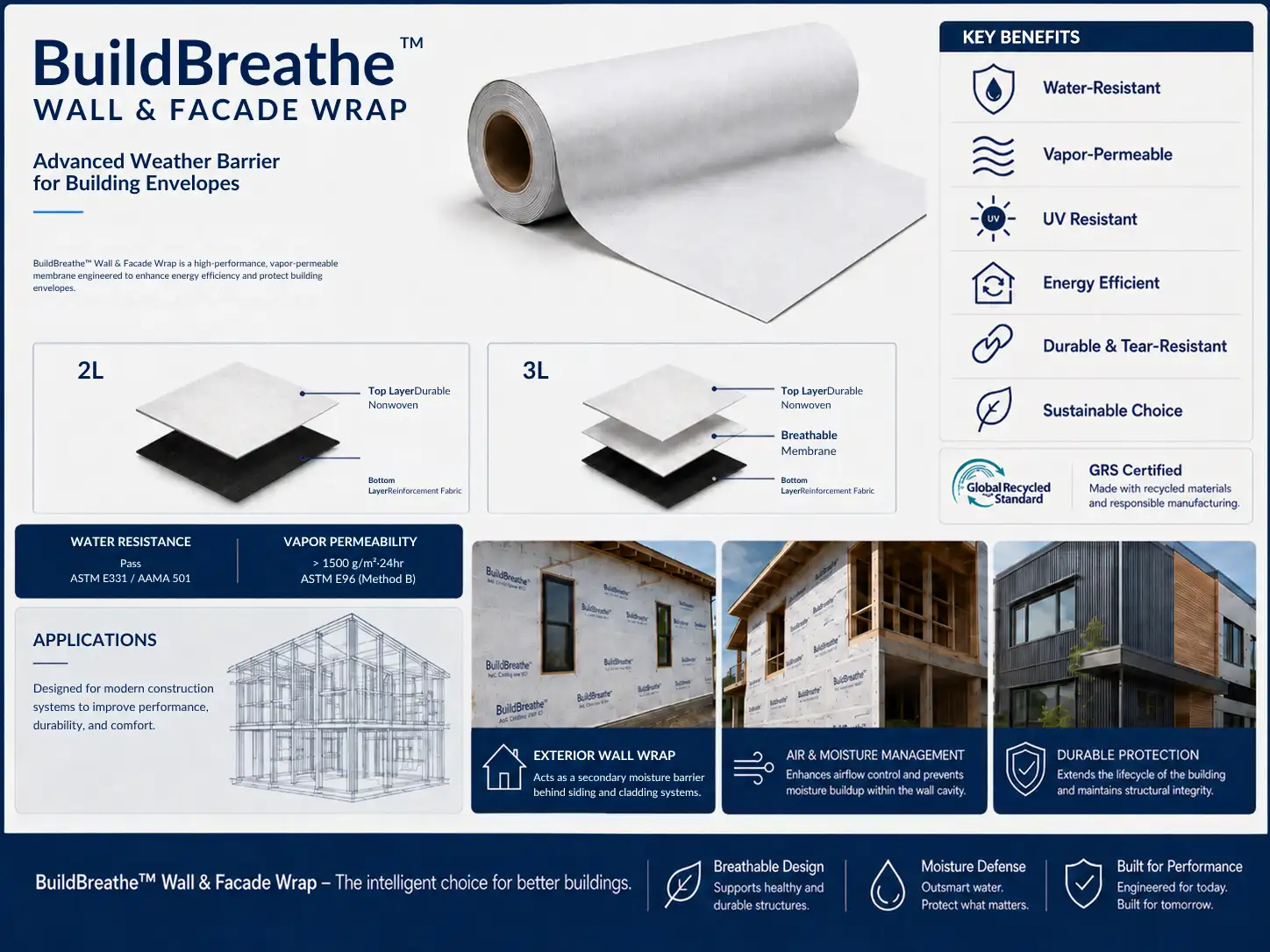
Kae Hwa’s BuildBreathe™ Wall & Facade Wrap is a high-performance vapor-permeable membrane engineered to enhance the energy efficiency and structural durability of modern building envelopes. By creating a robust airtight and water-resistant shield, this technical laminate prevents external elements from penetrating the structure while allowing internal moisture to escape, effectively eliminating the risk of interstitial condensation and mold growth.
Lightweight
Breathable
Waterproof
The “Smart Skin” of Modern Buildings — Breathable Waterproof Membrane Design for Walls and Facades
In modern green building design, where energy efficiency, structural durability, and moisture management are increasingly important, the building envelope is no longer simply a passive barrier against the external environment. It is a multilayer protection system that integrates waterproofing, wind resistance, insulation, air control, and moisture-vapor management.
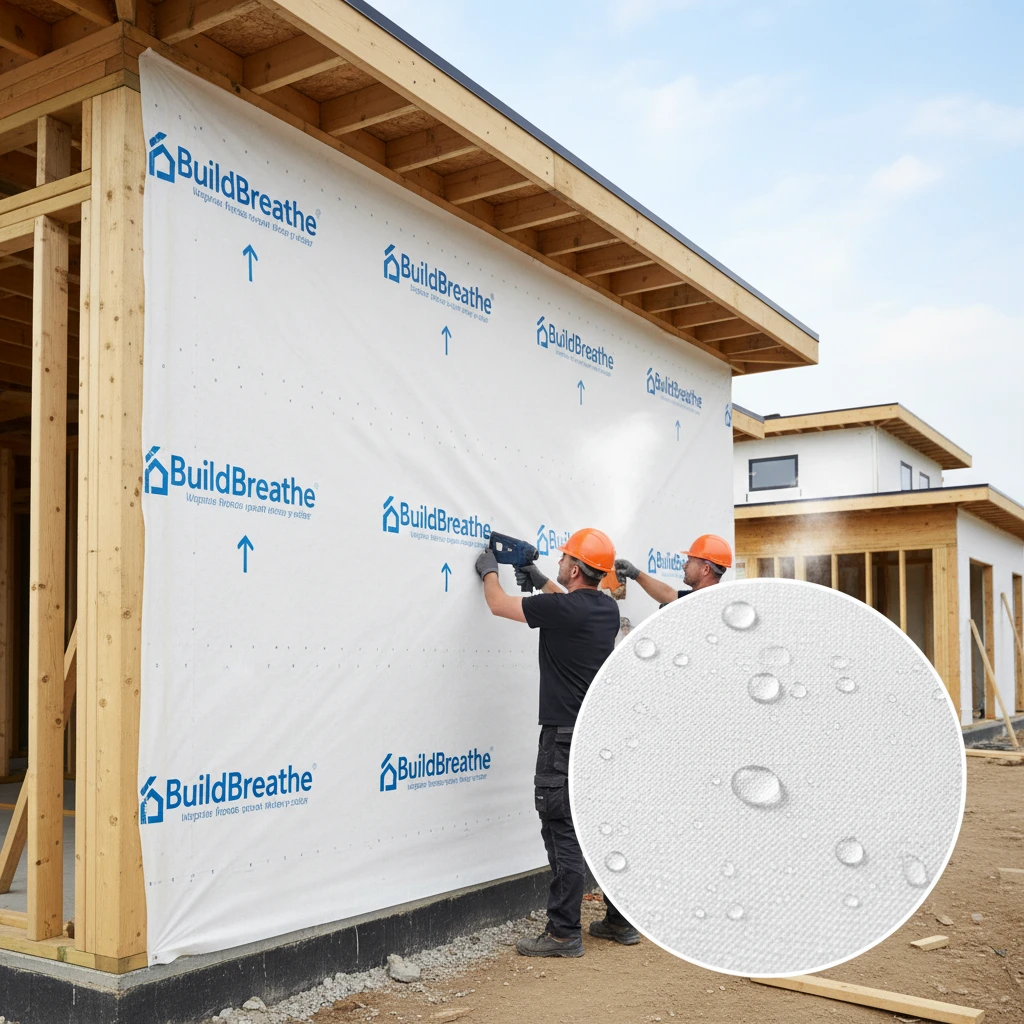
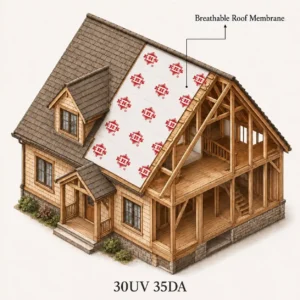
Developed by Kae Hwa Industrial, the BuildBreathe™ Wall & Facade Wrap is installed between the exterior cladding and the underlying wall structure. While helping resist wind-driven rain and external airflow, the material also provides a pathway for moisture vapor within the wall assembly to diffuse outward, reducing the risks of long-term moisture accumulation, declining insulation performance, and structural dampness.
As part of a complete building-envelope system, BuildBreathe™ can be engineered according to wall design, climate conditions, and target performance requirements. Membrane structure, moisture vapor transmission rate, hydrostatic resistance, and composite substrates can all be adjusted to provide stable wind, water, and moisture-management performance for residential buildings, commercial facades, and timber structures.
What Is the “Smart Skin” of a Building?
Traditional exterior-wall protection often focused primarily on preventing external rainwater penetration. Modern building-envelope design, however, must also consider air leakage, moisture-vapor transmission, insulation performance, and the ability of the wall assembly to dry.
BuildBreathe™ can be described as the building’s “smart skin” because it helps block external weather while providing a pathway for moisture vapor inside the wall to diffuse outward.
Outward protection — resisting liquid water and external airflow: Helps prevent wind-driven rain and external air from entering the wall structure.
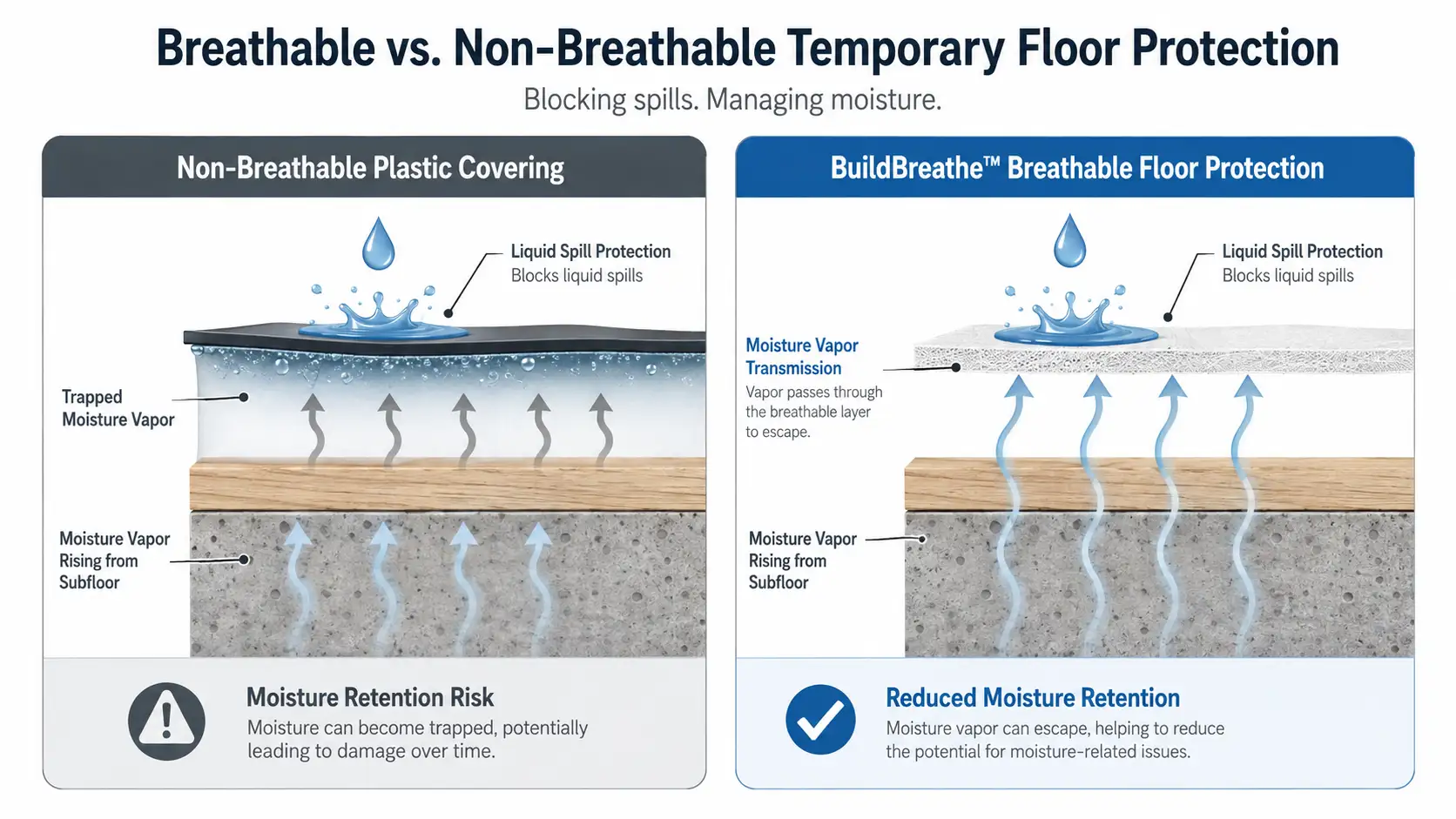
Outward drying — providing a moisture-vapor diffusion pathway: Allows moisture vapor accumulated within the wall structure and wall cavity to move outward, reducing the risk of long-term moisture retention.
Positioned beneath the exterior cladding, this functional membrane helps protect insulation materials, timber framing, and other structural components. It supports more stable protection and drying performance across changing environmental conditions.
Continuous Wind and Air Control: Reducing Air Leakage and Insulation Performance Loss
In green buildings and high-performance building envelopes, controlling air leakage is an important factor in maintaining indoor comfort and energy efficiency.
BuildBreathe™ Wall & Facade Wrap can serve as part of a wall’s wind and air-control system, helping manage external airflow, wind-driven rain, and air movement around the insulation layer.
When membrane overlaps, joints, penetrations, and window and door perimeters are properly sealed, BuildBreathe™ can function as part of a continuous wind and air-control system, helping reduce unintended air leakage.
Actual system performance still depends on installation details, including membrane overlap, joint tape, fastener penetrations, window and door openings, and service penetrations.
External airflow entering the insulation layer may affect the actual thermal performance of the insulation material.
A continuously installed wall membrane helps reduce airflow through the insulation layer, supporting more stable thermal performance throughout the wall system.
Thermal bridging must still be controlled through continuous insulation, structural-junction design, and appropriate fastening systems.
By reducing unintended air leakage and helping preserve insulation performance, a complete exterior-wall wind and air-control system can reduce heating and cooling loads and support a project’s energy-efficiency and carbon-reduction goals.
Actual energy performance will still depend on the building structure, insulation configuration, installation quality, climate conditions, and HVAC system efficiency.
Understanding Microporous and Monolithic Hydrophilic Technologies
To meet different wall-system, climate, and moisture-vapor transmission requirements, Kae Hwa Industrial offers two membrane technology pathways: microporous films and monolithic hydrophilic films.
Both technologies are designed to resist external liquid water while enabling moisture-vapor transmission. Their hydrostatic resistance, MVTR, mechanical properties, and composite structures can be engineered according to application requirements.
Microporous films are produced through precisely controlled material formulations and stretching processes that form fine pores within the membrane.
These pores provide pathways for moisture-vapor transmission, while the pore structure and material surface properties help resist liquid-water penetration.
Pore structure, basis weight, thickness, and formulation can be adjusted according to application requirements to balance MVTR, hydrostatic resistance, and converting performance.
Monolithic hydrophilic films use hydrophilic polymer technology. Rather than relying on physical pores, the membrane transports moisture vapor through hydrophilic groups within the polymer chains.
Moisture-vapor molecules are first absorbed by the membrane surface, diffuse through the polymer chains, and are then desorbed and released from the opposite side. This creates an absorption, diffusion, and desorption transmission process.
Because the monolithic structure does not depend on physical micropores, it can reduce risks associated with pore contamination caused by oils, surfactants, or surface wetting. Mechanical properties can be engineered according to the material formulation and composite structure.
Climate-Specific Material Design for Different Wall Systems
Different climate zones place different demands on wall waterproofing, air control, and moisture-vapor transmission.
Humid and rainy regions generally require greater resistance to wind-driven rain and weather exposure. In colder climates or areas with significant day-to-night temperature changes, designers must carefully evaluate vapor-pressure differences and drying pathways across the wall assembly.
BuildBreathe™ can be engineered according to the wall structure, target MVTR, hydrostatic resistance, and mechanical-performance requirements. Final specifications should nevertheless be confirmed in relation to the complete wall system and local installation conditions.
In addition to climate, material selection should consider:
Exterior cladding type and ventilated-cavity design
Insulation material and thickness
Placement of vapor-control layers within the wall assembly
Joint sealing and window-perimeter detailing
Expected construction exposure period
Applicable local building codes and testing requirements
A breathable waterproof membrane should be evaluated as one component of the complete building envelope, together with insulation, vapor control, airtightness, drainage, and facade design.
Jobsite Durability and Precision Manufacturing Control
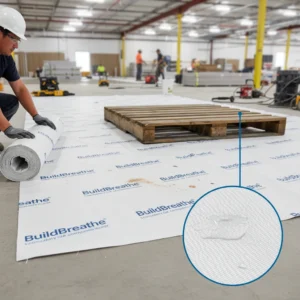
During construction, exterior-wall membranes may be exposed to handling, pulling, fastening, penetrations, wind loads, contact with tools, and short-term sunlight exposure.
BuildBreathe™ can combine engineered membrane formulations, controlled thickness, and reinforced composite structures to improve material stability during installation and subsequent service.
Precision cast-film extrusion technology controls the thickness tolerance of the core functional membrane within ±0.01 mm.
Stable thickness control helps reduce performance variation caused by uneven film formation and improves consistency in moisture-vapor transmission and hydrostatic resistance throughout the roll.
Depending on the material structure and application requirements, Kae Hwa Industrial can apply precision adhesive coating, solvent-free lamination, and other suitable composite processes.
Through controlled adhesive application, web tension, and processing conditions, the material can maintain its waterproof and moisture-vapor transmission performance while improving tear resistance, puncture resistance, and converting stability.
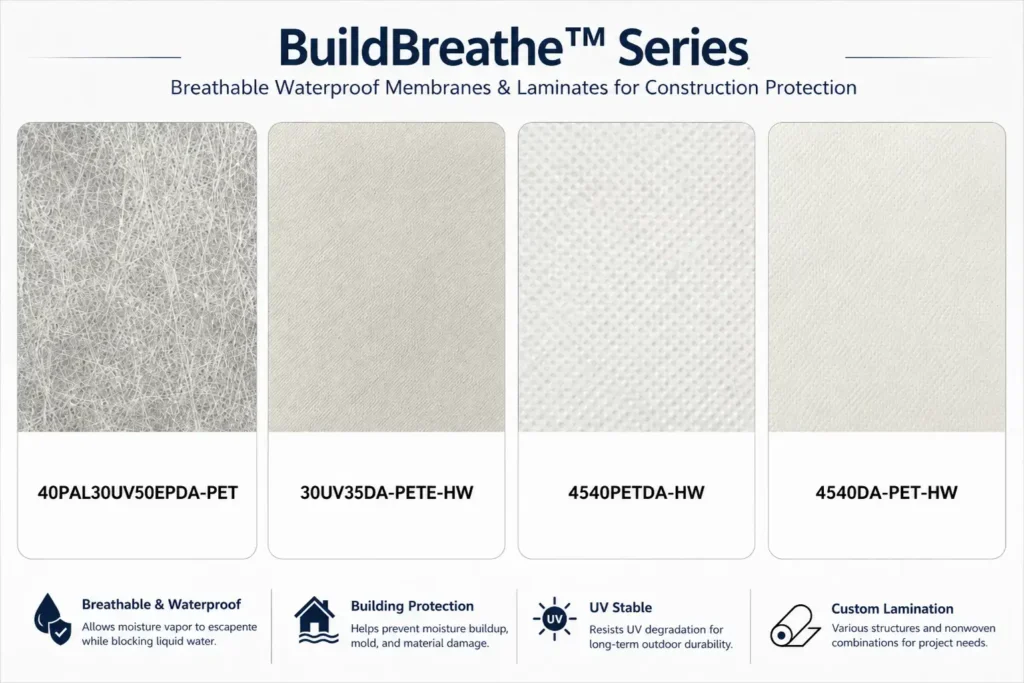
The functional membrane can be combined with high-strength nonwovens or technical textiles in 2-layer or 3-layer configurations to improve dimensional stability, tensile strength, and material integrity according to installation requirements.
UV- and thermal-stabilized formulations can improve material durability during construction exposure and under elevated facade temperatures, helping delay aging, embrittlement, and deterioration of physical properties.
The actual allowable exposure period should be confirmed according to product grade, testing results, and installation conditions.
Creating a Reliable Moisture-Management Layer for Exterior-Wall Systems
The value of a breathable waterproof wall membrane extends beyond resisting rainwater. It also helps the complete wall system manage external weather, air leakage, and internal moisture-vapor transmission.
Drawing on more than 60 years of experience in chemical materials and manufacturing, together with long-established expertise in waterproof and breathable membrane development, Kae Hwa Industrial provides customized options for membrane formulations, basis weights, widths, printing, and 2-layer or 3-layer composite structures.
With its manufacturing base in Taiwan and extensive global service experience, Kae Hwa Industrial provides customized membrane and lamination solutions for building-material brands, material converters, and engineering supply chains. Its products serve global markets and are supported by international cooperation experience across a wide range of industries.
Kae Hwa Industrial’s quality and environmental management systems are certified to ISO 9001 and ISO 14001. The company has also completed ISO 14064-1 greenhouse-gas inventory verification and has experience in GRS recycled-material supply-chain management. Relevant material solutions can be provided according to product specifications and the applicable scope of each certification.
For a new wall or facade material-development project, customers are encouraged to provide the proposed wall structure, climate zone, target MVTR, hydrostatic-resistance requirements, dimensions, and downstream processing methods. This information allows the technical team to evaluate suitable materials and prepare samples more effectively.
Redefining the Boundaries of Breathable Technology
Why Choose BuildBreathe™ for Wall & Facade Protection
With over 60 years of expertise in polymer science and functional membranes, Kae Hwa Industrial Co., Ltd. is a global leader in "Engineering Invisible Safety." Our BuildBreathe™ Wall & Facade Wrap is designed to meet the rigorous demands of modern construction, ensuring that building envelopes remain resilient against environmental stress while promoting energy efficiency and occupant comfort.
Proven Air & Moisture Management Expertise
Superior Wind Resistance with Vapor Permeability
Consistent Quality Backed by ±0.01 mm Precision Technology
Sustainable Manufacturing with Solvent-Free Lamination
Trusted by Global Building Material Brands and Contractors
Global supply stability from production bases in Taiwan and Malaysia.
BuildBreathe™ – Reliability in Every Layer
Kae Hwa’s commitment to technical precision and structural health ensures that BuildBreathe™ products remain a preferred choice for building envelope solutions. With certified performance and long-term durability, our wall wraps provide the security needed for high-value architectural projects. Whether you are designing residential homes or industrial complexes, BuildBreathe™ offers the engineered protection required for sustainable, moisture-secure construction.

It prevents moisture from being trapped inside the wall cavity. BuildBreathe™ allows internal vapor to escape while blocking external liquid water, which is essential for preventing structural rot and mold growth in modern airtight buildings.
Consistent thickness ensures uniform vapor transmission and hydrostatic resistance. This eliminates weak spots that could lead to localized leaks or moisture buildup, providing reliable performance for large-scale projects.
Our specialized lamination process creates a tight seal that prevents air leakage through the building envelope. This reduces drafts and thermal bridging, significantly improving the building's overall energy efficiency and comfort.
Yes. We can customize the Moisture Vapor Transmission Rate (MVTR) and water resistance levels to meet the specific requirements of various climates, from humid coastal areas to dry, cold mountain regions.