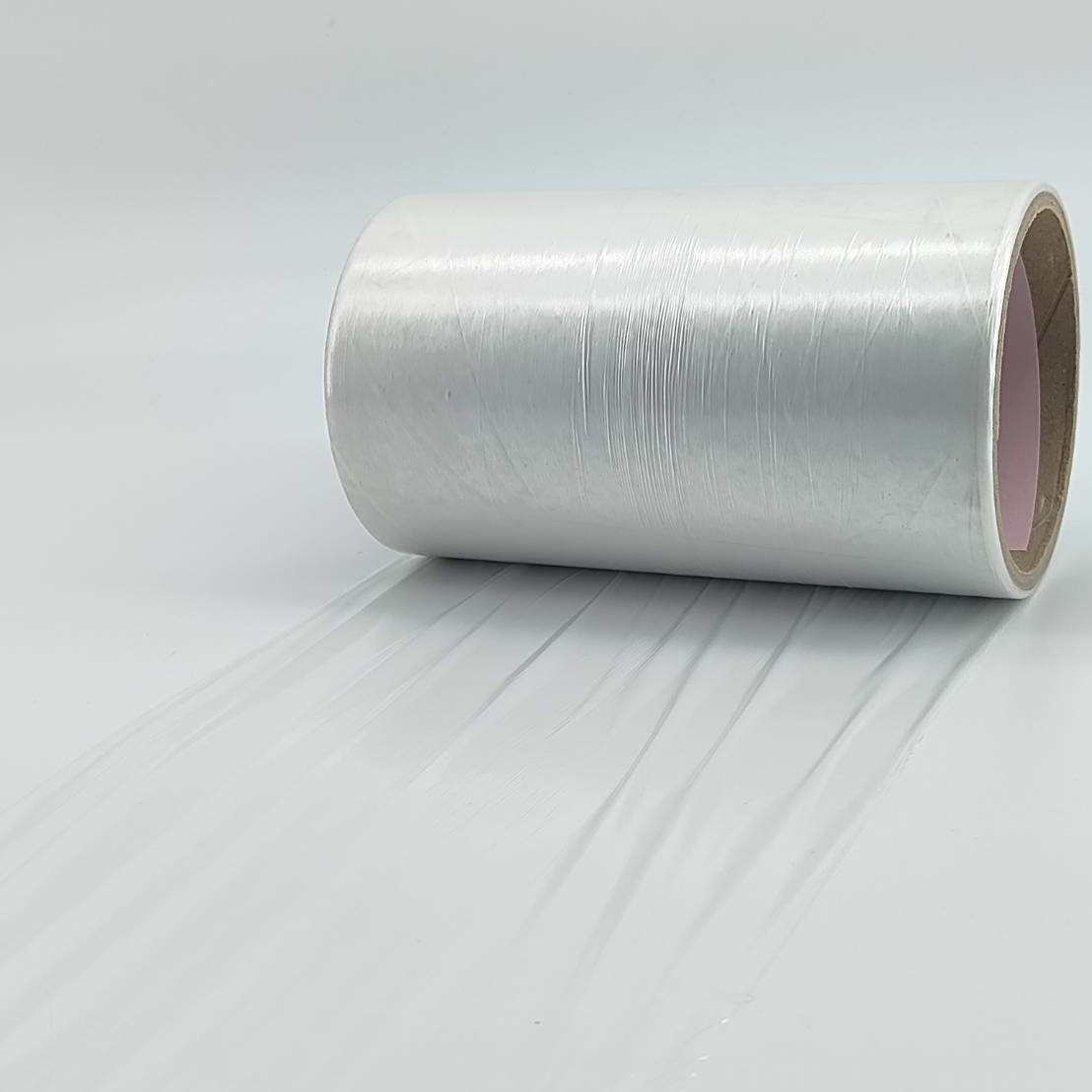
Microbreath PP- Polypropylene Breathable Film

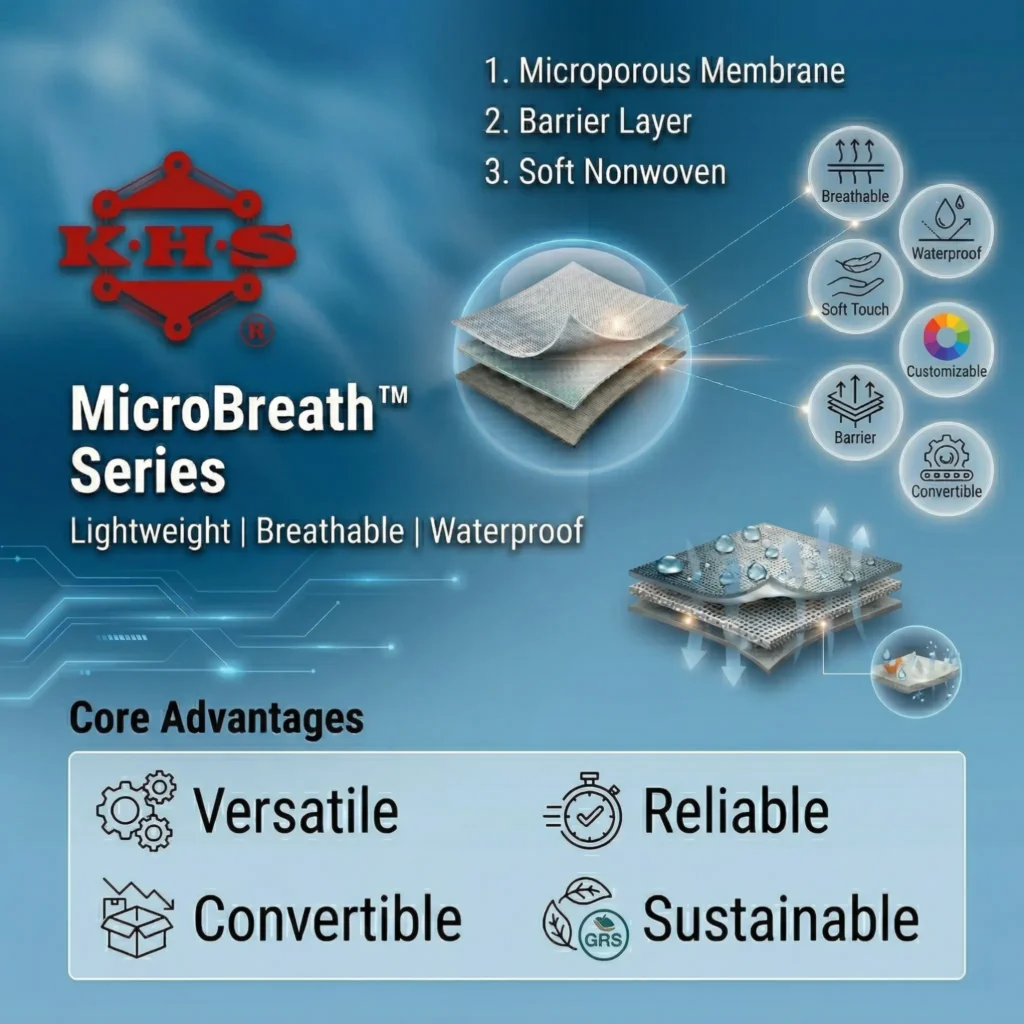
MicroBreath PP by Kae Hwa Industrial is a high-strength polypropylene breathable film engineered for industrial, agricultural, and protective applications. Offering superior tensile strength, thermal resistance, and chemical durability, it delivers stable microporous breathability and long-lasting waterproof protection.
 Lightweight
 Breathable
 Waterproof

MicroBreath PP – Polypropylene Breathable Film for High-Strength Industrial & Protective Applications

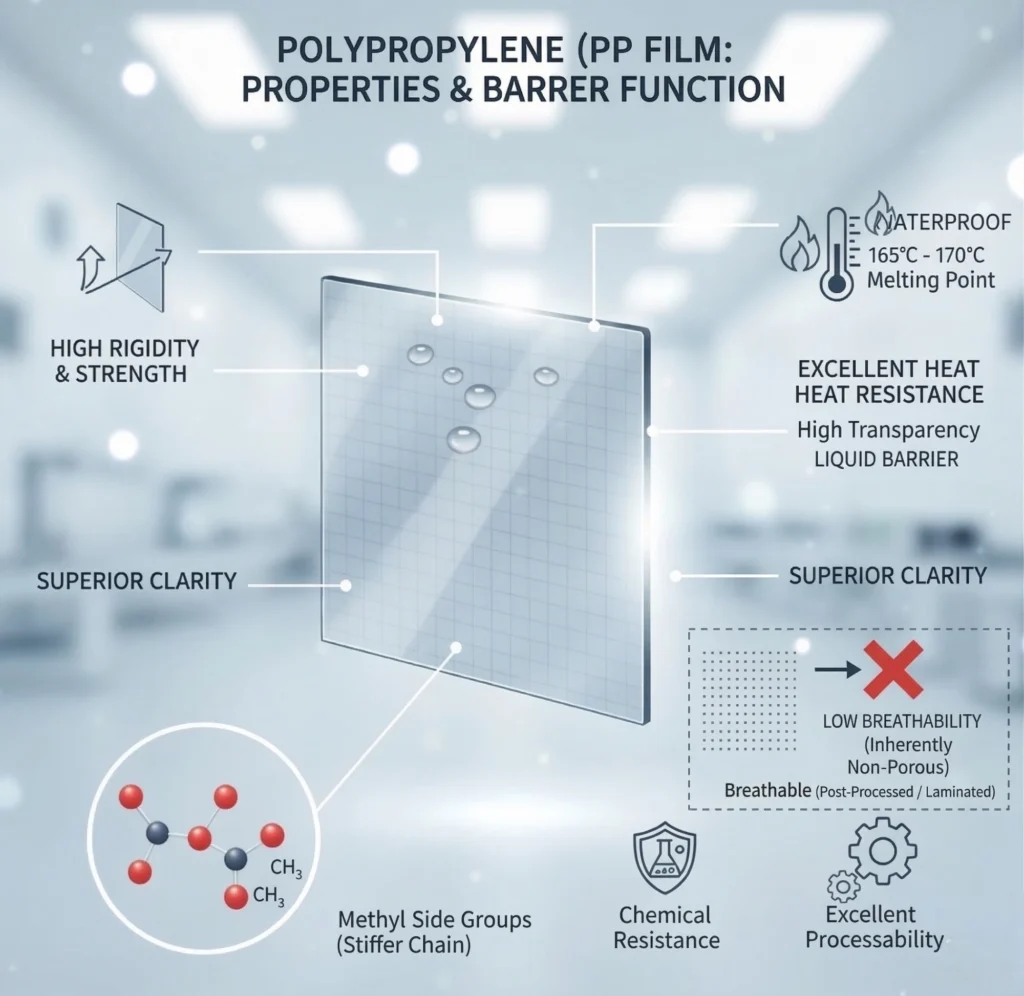
MicroBreath PP, developed by Kae Hwa Industrial Co., Ltd., is a microporous polypropylene breathable film engineered for applications that require greater mechanical strength, higher thermal resistance, and enhanced chemical durability compared to polyethylene-based breathable films.

Leveraging the inherent properties of polypropylene, this film features a stiffer and more structurally stable profile, making it ideal for industrial, agricultural, construction, and technical protective applications that demand long-term durability rather than softness.

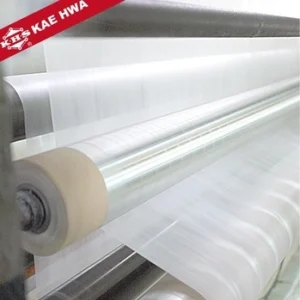
Produced through precision casting and controlled stretching, MicroBreath™ PP forms a highly stable microporous network that enables moisture vapor transmission while maintaining strong liquid barrier performance.

Its rigidity, elevated temperature tolerance, and solvent resistance make it the preferred choice when breathable protection must withstand harsh conditions or extended usage.

Core Advantages

Engineered pores allow controlled vapor transmission while providing reliable liquid barrier protection.

Maintains performance under pressure, bending, abrasion, and long-term environmental exposure.

Designed with robust tensile and tear resistance, MicroBreath™ PP maintains structural integrity under demanding industrial conditions.

Withstands high-temperature lamination and processing (up to 160–170°C), ensuring stable performance where PE films cannot endure.

Compatible with industrial converting methods such as lamination, extrusion coating, and printing, ensuring smooth production performance.

What Makes MicroBreath™ PP Different from MicroBreath™ PE

PP VS PE

Although both belong to the MicroBreath breathable membrane family, PP and PE films serve very different performance needs due to their inherent material characteristics.

MicroBreath PE is engineered for softness, flexibility, and skin contact applications, making it the preferred choice for hygiene backsheets, medical comfort layers, and lightweight breathable laminates.

Its cloth-like touch, low heat-seal temperature, and high processing efficiency make it ideal for large-volume hygiene and medical products.

In contrast, MicroBreath PP is developed for strength, durability, and resistance to demanding environments.

Polypropylene’s natural rigidity, higher melting point, and superior chemical resistance allow MicroBreath™ PP to deliver long-term performance in industrial, agricultural, and protective applications where PE cannot meet structural or durability requirements.

  • PP offers higher tensile and tear strength, while PE provides a soft and flexible hand-feel.
  • PP withstands higher processing temperatures, whereas PE enables low-temperature, high-speed sealing.
  • PP maintains dimensional stability in outdoor or chemical exposure, while PE is optimized for comfort and breathability for skin-contact uses.

Specification

Brand MicroBreath PP
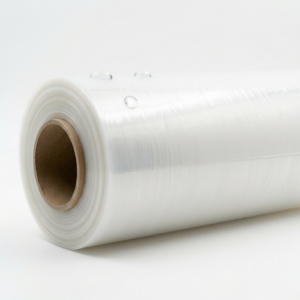
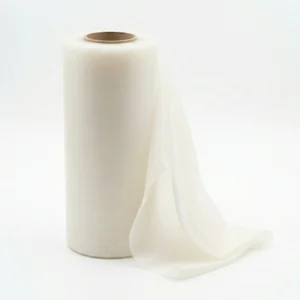
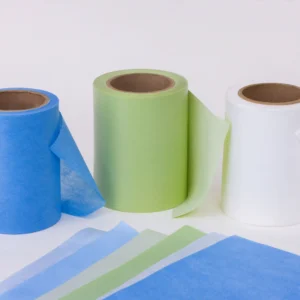
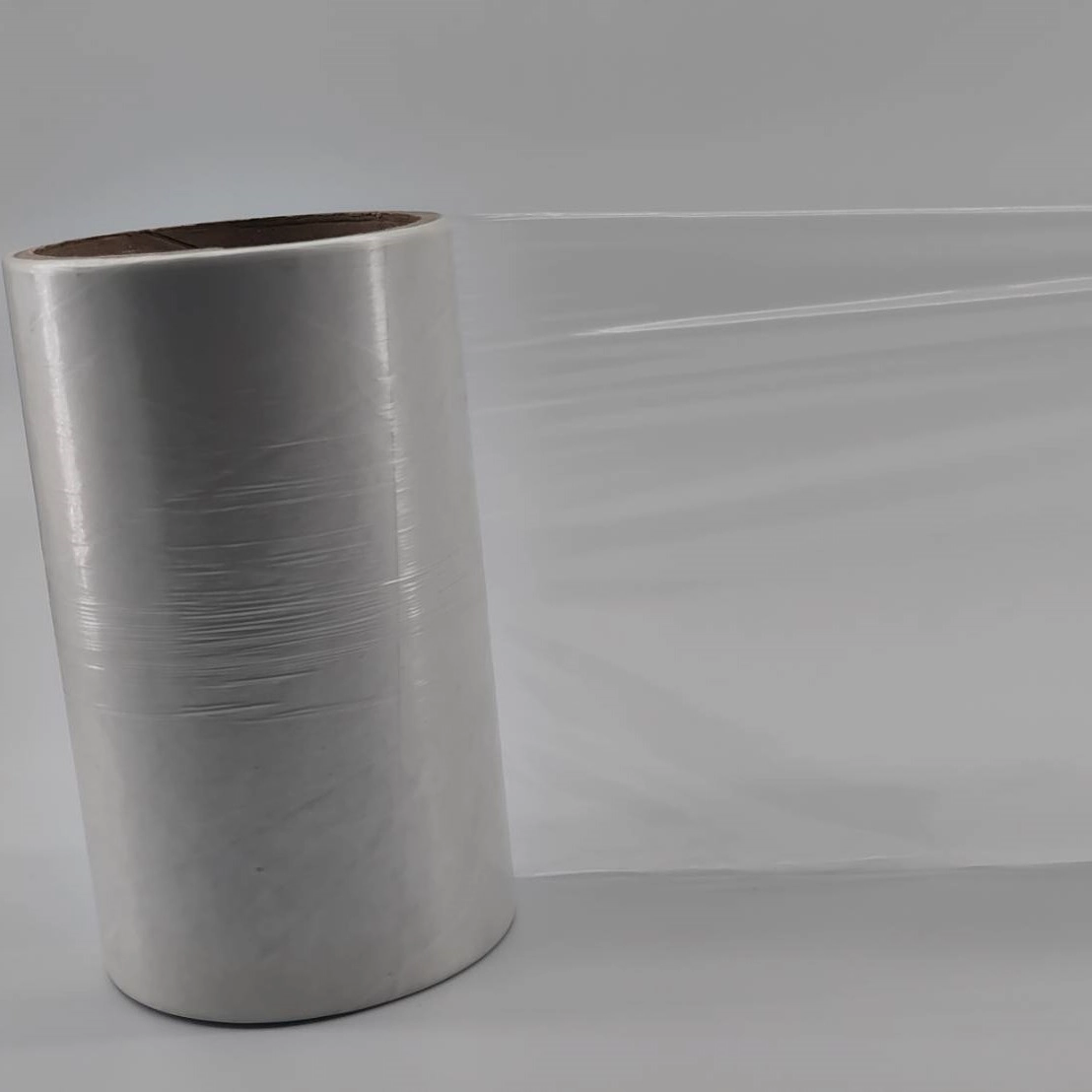
Product Form Roll
Material Breathable Polypropylene (PP) Film
Structure Single Layer Microporous Film
Breathability Mechanism High Vapor Permeability
Barrier Properties High Hydrostatic Pressure Resistance, High Heat Resistance
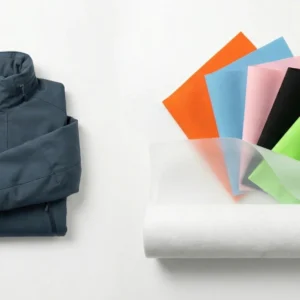
Surface Treatment Smooth / Embossed / Corona / Rotogravure Printing (1-4 colors) / Custom Colors
Weight 10 - 100 gsm
Overall Width 80 - 2000 mm (Customizable)
Length 2000 M
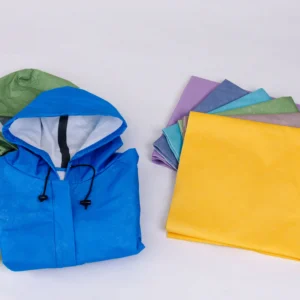
Application High-heat lamination, hygiene backsheets, medical fabrics, industrial protective materials, consumer packaging
Request a Sample

Redefining the Boundaries of Breathable Technology

Kae Hwa Expertise in Polypropylene Breathable Films

Kae Hwa Industrial brings decades of polymer engineering experience to the development of high-strength PP breathable films. Through advanced casting and stretching technology, we ensure stable micropore formation, consistent mechanical strength, and reliable durability for industrial-grade applications. Our ISO-certified production and custom-engineered PP formulations deliver superior heat resistance, chemical stability, and long-term performance tailored to protective, agricultural, and construction needs.
About Us

FAQ

MicroBreath™ PP is specifically engineered for demanding environments that require robust mechanical strength rather than softness. It is the ideal choice for industrial, agricultural, construction, and technical protective applications where long-term durability, chemical resistance, and structural stability are critical.

While both are microporous breathable films, they serve completely different needs:

  • MicroBreath™ PP is built for strength, rigidity, and harsh environments. It offers higher tensile and tear strength, making it perfect for industrial use.

  • MicroBreath™ PE is engineered for softness, flexibility, and comfort. With its cloth-like touch, it is the preferred choice for hygiene backsheets and skin-contact medical applications.

Yes, absolutely! One of the standout features of polypropylene is its superior thermal stability. MicroBreath™ PP can easily withstand high-temperature lamination and processing environments—up to 160–170°C—ensuring stable performance in scenarios where standard PE films would melt or deform.

Our film is produced through a specialized precision casting and controlled stretching process. This creates a highly stable microporous network. These engineered microscopic pores are carefully sized to allow moisture vapor to transmit freely (keeping the covered area breathable) while forming a strict, reliable barrier against liquid penetration.

Yes. Leveraging Kae Hwa’s decades of polymer engineering expertise, MicroBreath™ PP is designed for clean, consistent, and highly efficient processing. It is fully compatible with standard industrial converting methods, including lamination, extrusion coating, and printing, ensuring smooth integration into your existing production lines.