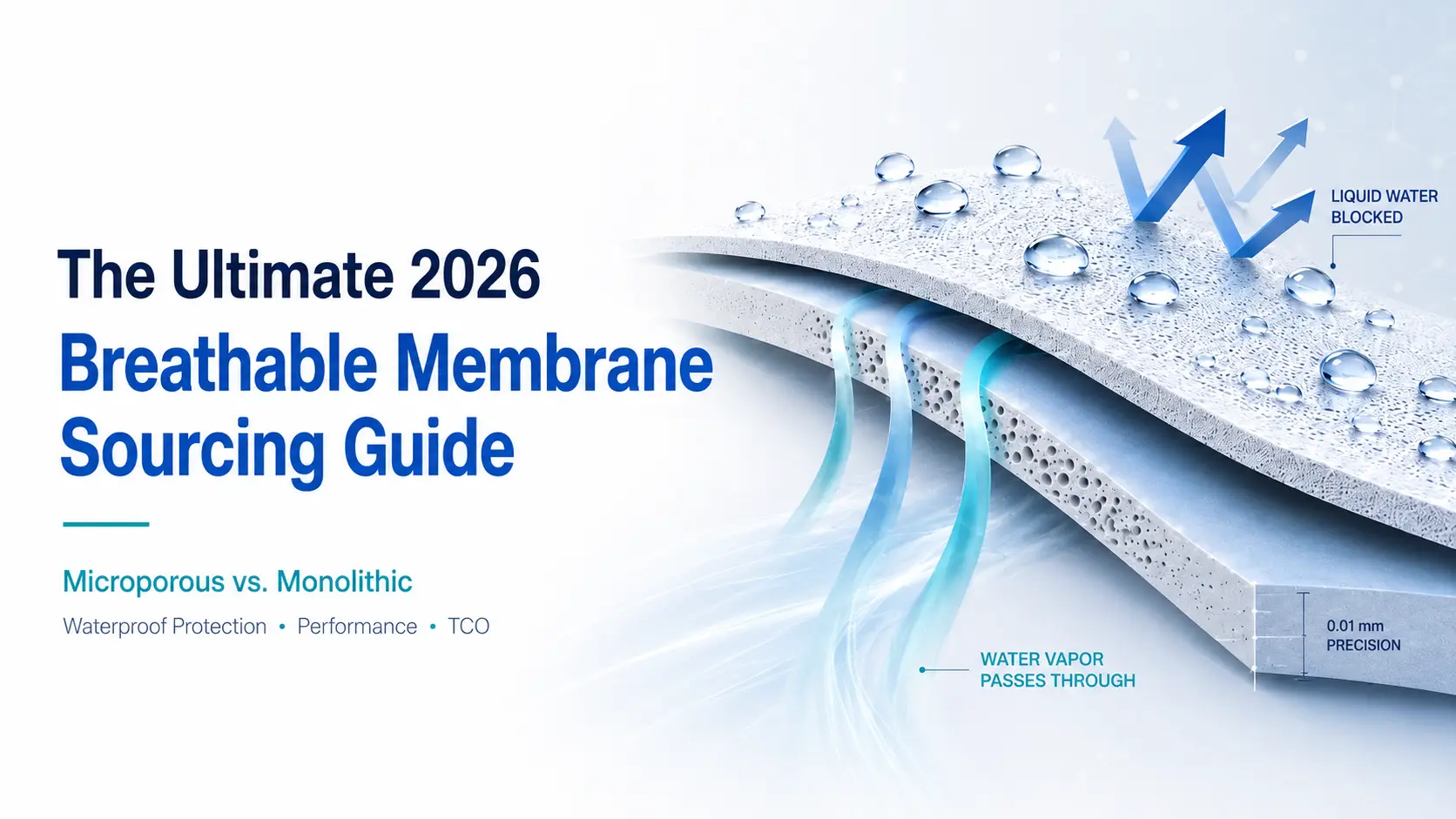
This comprehensive B2B sourcing guide is tailored for R&D engineers, procurement managers, and product managers navigating the breathable membrane market. It expertly translates intricate polymer science into strategic content that addresses real-world business challenges, such as supply chain stability, processing yield, and Total Cost of Ownership (TCO).
The article debunks common waterproofing myths and provides a detailed technical comparison between microporous (MicroBreath™) and monolithic (AquaVene™) technologies. Furthermore, it highlights Kae Hwa Industrial’s over 60 years of chemical engineering expertise, emphasizing their 0.01 mm casting precision and compliance with stringent international standards like ASTM, EN, and ISO. Ultimately, this guide transcends standard specification sheets, successfully positioning Kae Hwa as a highly reliable, strategic global partner for customized barrier solutions across the hygiene, medical, and construction industries.
The Science of Waterproof Protection: A Comprehensive Selection Guide for Breathable Membranes
For decades, engineers and product managers in the hygiene, medical, construction, and functional apparel industries have grappled with a fundamental materials challenge: how to design a barrier that completely blocks liquid water while seamlessly allowing vapor to escape. Finding the perfect balance between these seemingly contradictory forces is no longer just a matter of basic material science; it is a critical procurement and R&D decision that impacts the total cost of ownership, regulatory compliance, and ultimate product performance.
This comprehensive guide breaks down the core technologies behind the modern breathable membrane and provides a roadmap for selecting the optimal solution for your specific application.
Breaking the Myth: Why High-Quality Breathable Membranes are Waterproof but Not Leaky
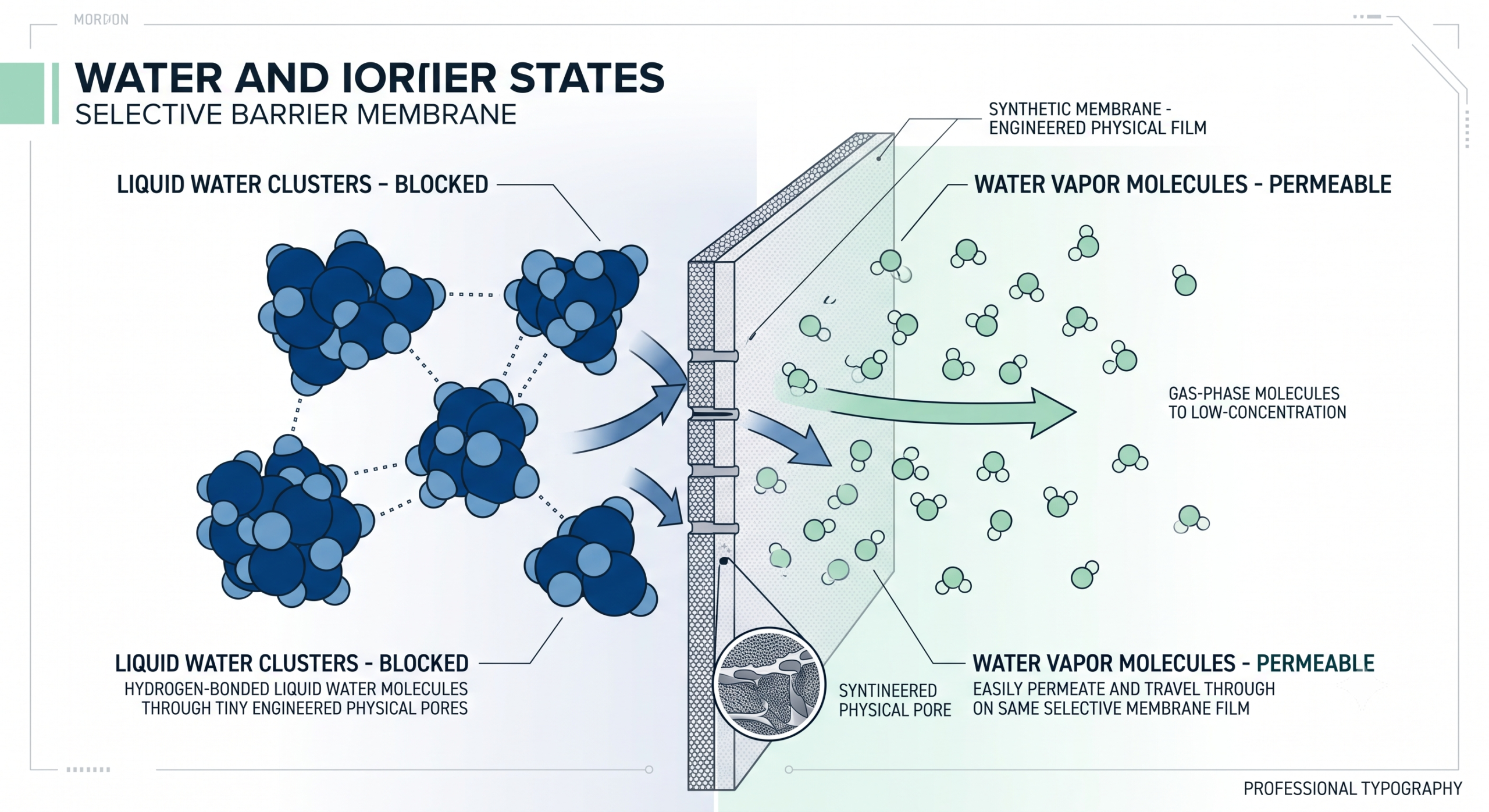
There is a persistent myth in material sourcing that “breathability” inherently compromises waterproof integrity. This misconception stems from a misunderstanding of molecular dynamics.
At the microscopic level, liquid water molecules typically exist as hydrogen-bonded clusters, which possess surface tension and kinetic diameters that far exceed those of individual, gas-phase water molecules (water vapor). A high-quality breathable membrane functions as a highly selective barrier, exploiting this size and behavior differential. It is engineered to block the larger, cohesive liquid droplets while providing specific pathways—either physical or chemical—for the much smaller vapor molecules to escape. Understanding this distinction is the first step in moving past static lab data and selecting a membrane that actually performs in dynamic, real-world conditions.
Microporous vs. Monolithic: Which Technology Fits Your Application?
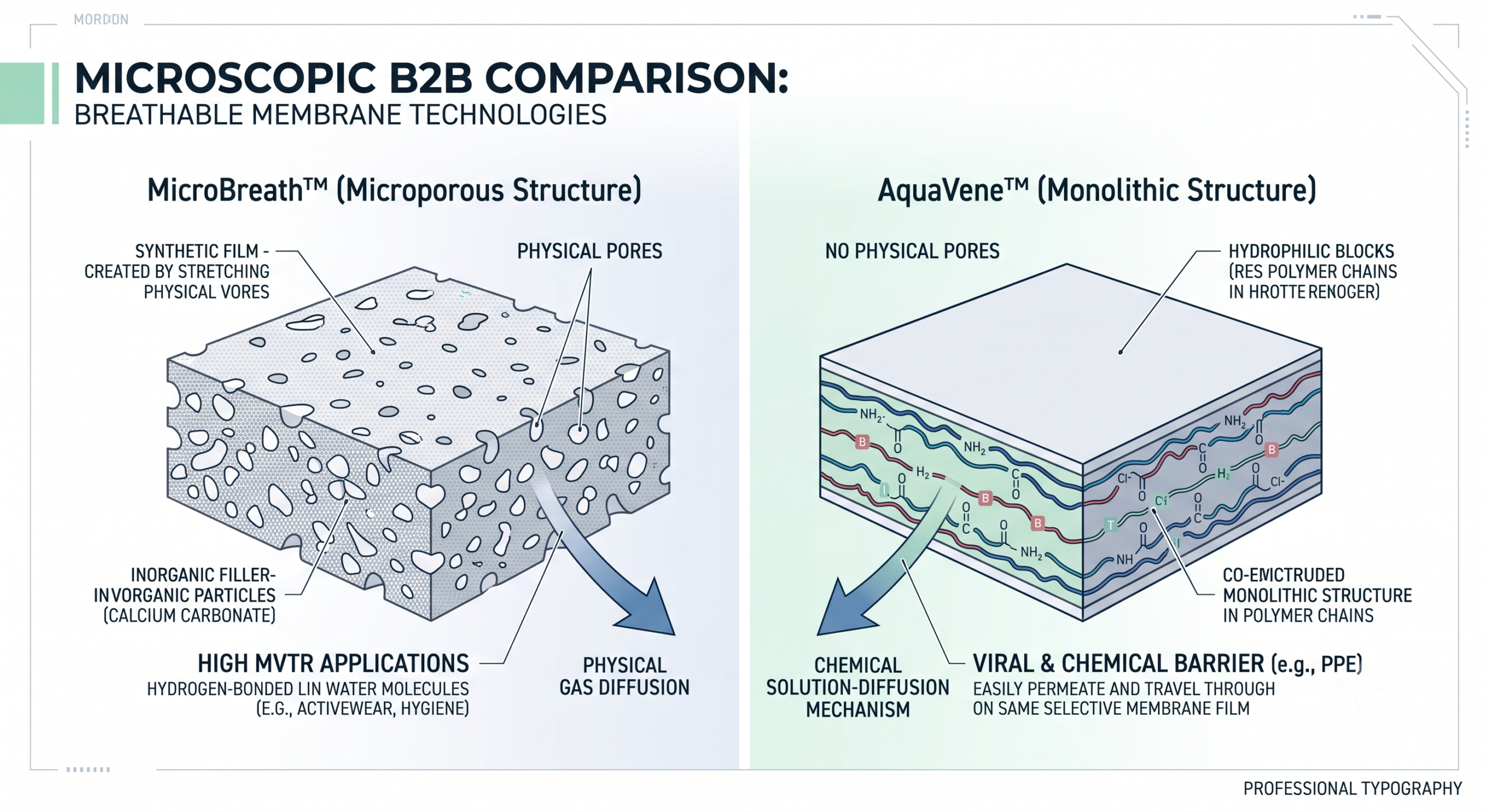
To address the paradox of waterproofing and breathability, the industry has developed two primary technological pathways: microporous and monolithic structures. For a deeper dive into the underlying mechanisms, see our detailed technical breakdown of these two structures.
MicroBreath™: The Microporous Standard for High MVTR Applications
Microporous technology relies on a precisely engineered physical structure. During manufacturing, inorganic fillers, typically carefully controlled Calcium Carbonate particles, are uniformly mixed into a polymer matrix.
-
The Mechanism: Through a specialized biaxially oriented stretching process, stress is concentrated at the interface between the filler and the polymer, inducing the formation of uniformly distributed micro-cracks or voids.
-
The Advantage: These voids are small enough to block liquid water but large enough to allow unrestricted airflow, resulting in an exceptionally high Moisture Vapor Transmission Rate (MVTR).
-
Best For: Applications requiring immediate, high-volume vapor release, such as activewear, backsheet films for hygiene products, and highly breathable roofing underlayments.
AquaVene™: The Monolithic Solution for Viral and Chemical Barriers
Unlike its microporous counterpart, a monolithic membrane utilizes a “chemical solution-diffusion mechanism”.
-
The Mechanism: The membrane structure is inherently dense and lacks observable physical pores. Instead, hydrophilic blocks within the polymer chain actively absorb water molecules from the high-humidity side and transport them to the low-humidity exterior through the thermal motion of the chains.
-
The Advantage: Because there are no physical pores, these membranes offer superior resistance to contamination and are not easily compromised by oils, detergents, or particulate matter.
-
Best For: Critical medical PPE, surgical drapes, and industrial hazardous material suits where an absolute barrier against pathogens or chemicals is non-negotiable. See our comparison of ASTM F1671 vs. EN 14126 viral-barrier testing for how these barriers are actually validated.
Which Performance Metrics Matter Beyond Static Lab Data? (MVTR and Hydrostatic Head)
When evaluating a breathable membrane, R&D and Procurement teams must look beyond isolated data points and understand how metrics interact:
-
Hydrostatic Head (Pressure Resistance): This is the critical metric for measuring waterproof strength. It indicates the amount of water pressure a membrane can withstand before liquid penetrates. A higher number is essential for load-bearing applications like construction wraps or heavy-duty outdoor gear.
-
MVTR (Moisture Vapor Transmission Rate): This measures the emission efficiency of gas molecules through the membrane. While a high MVTR is generally desirable for comfort, it must be carefully balanced against the required Hydrostatic Head to prevent creating “through-holes” that compromise the waterproof barrier.
-
Dynamic Processing Adaptability: For procurement, the most critical metric is often how the membrane behaves on the production line. High theoretical performance is useless if the material shrinks, stretches unevenly, or delaminates during downstream composite processing.
Engineering the Difference: The Impact of 0.01 mm Precision and In-Line Lamination
Achieving the delicate balance between MVTR and Hydrostatic Head is impossible without rigorous manufacturing standards. Therefore, the true cost of a breathable membrane is not just its unit price, but its impact on manufacturing yield. Kae Hwa Industrial leverages over 60 years of chemical expertise to ensure absolute consistency.
By maintaining casting precision down to 0.01 mm, we eliminate the thick-and-thin bands that plague lower-quality films. Read more on how precision casting solves uneven thickness and why this tolerance improves reliability. Furthermore, our strict optimization of process parameters—such as matching the Melt Index (MI) of different resin layers—ensures superior interlayer bonding. This precision drastically reduces the formation of gels (fish-eyes) and prevents delamination during in-line lamination and printing processes. For procurement managers, this translates directly to reduced downtime, fewer customer complaints, and a significantly lower Total Cost of Ownership (TCO).
Industry Focus: From HygieSoft™ Hygiene Comfort to BuildBreathe™ Structural Integrity
Kae Hwa Industrial’s portfolio is specifically tailored to meet the distinct regulatory and performance demands of diverse industries:
-
HygieSoft™ for Hygiene & Medical: Designed for baby diapers, adult incontinence products, and feminine care. HygieSoft™ utilizes an optimized microporous structure to deliver ultra-soft tactile comfort while maintaining a reliable fluid barrier, preventing skin irritation through rapid moisture dissipation.
-
BuildBreathe™ for Construction: A robust, weather-resistant barrier engineered for house wraps and roofing underlayments. BuildBreathe™ protects structural timber and insulation from external rain while allowing internal condensation to escape, preventing catastrophic mold and rot over the building’s lifespan.
Conclusion: Choosing Kae Hwa as Your Strategic Material Partner
Sourcing the right breathable membrane requires more than comparing spec sheets; it requires a strategic partner with deep chemical engineering roots and integrated manufacturing capabilities. With over six decades of expertise, Kae Hwa Industrial does not just supply film; we engineer customized barrier solutions.
By prioritizing strict quality control, high-precision extrusion, and advanced in-line lamination, we help R&D solve complex physical contradictions while giving Procurement the supply chain stability they demand. Backed by comprehensive international certifications (ASTM, EN, ISO), Kae Hwa Industrial is positioned to elevate your product’s performance and market competitiveness globally.
To learn more about Breathable Membrane, explore Kae Hwa’s waterproof breathable membrane and lamination technologies, or contact our team for material guidance.