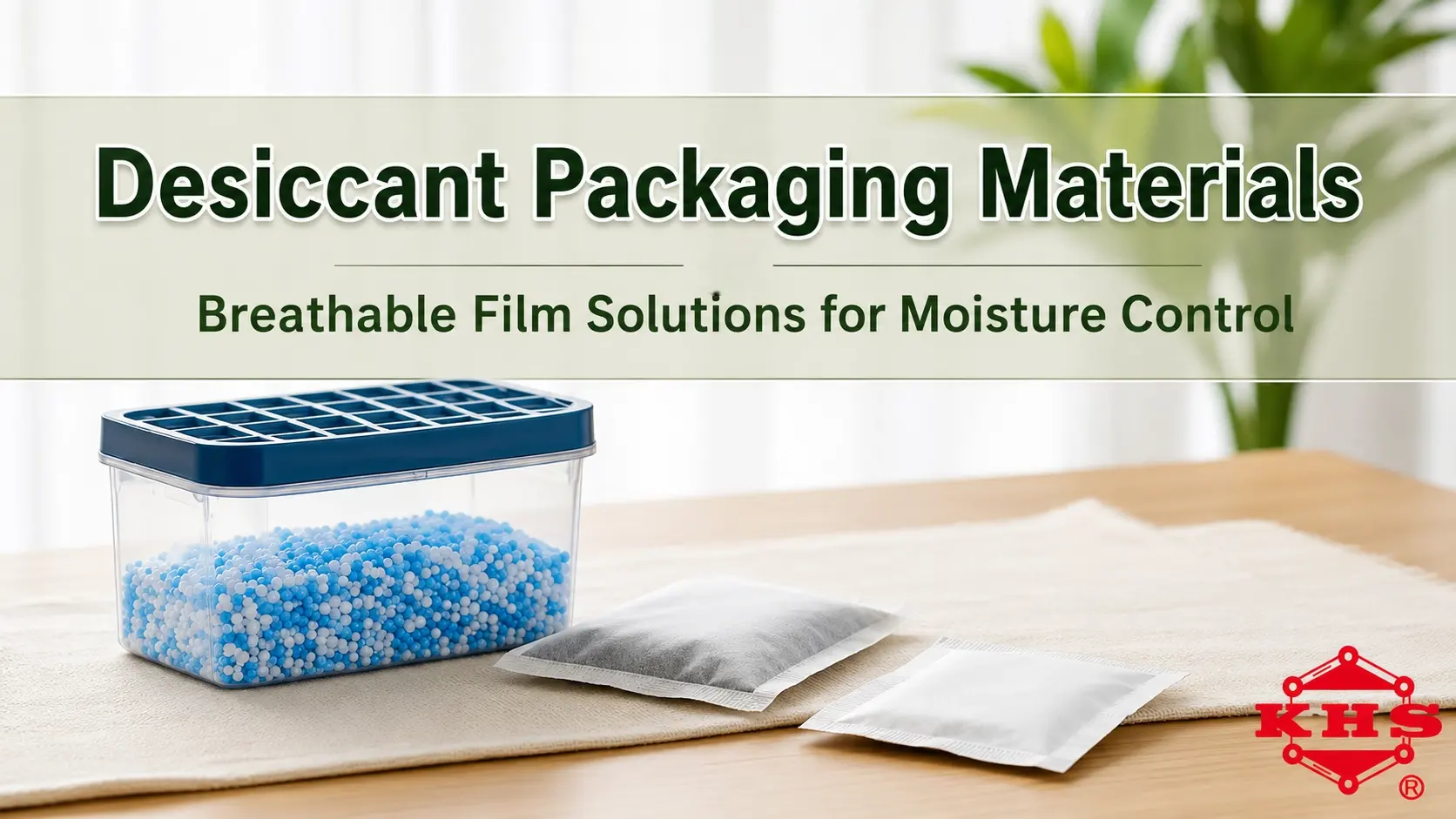
Why Breathability Is Important for Desiccant Packaging Breathable Film
Desiccant and functional packaging products rely on interaction with the surrounding environment. Unlike general plastic packaging, which often aims to create a complete seal, moisture-control packaging needs a more selective structure.
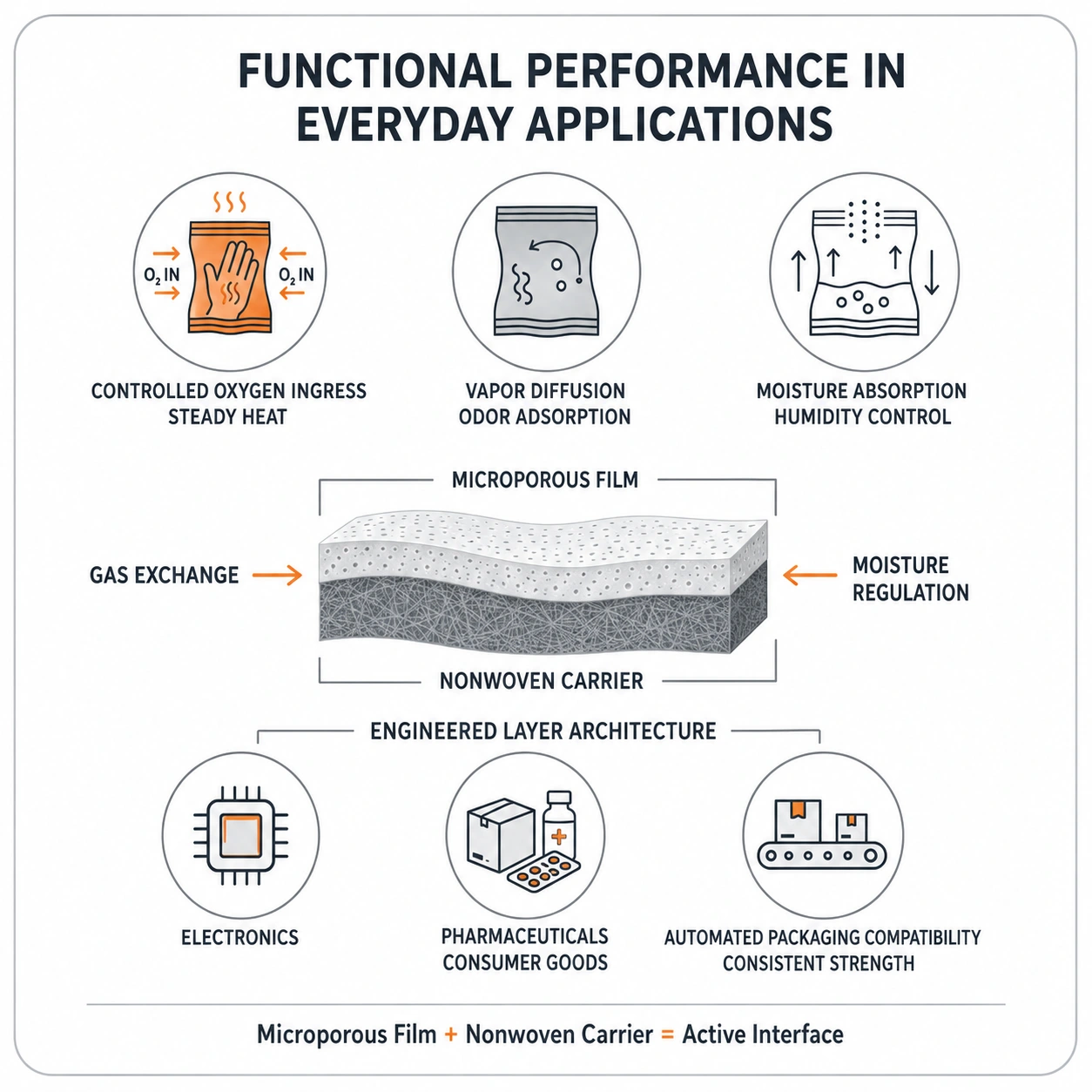
For desiccant sachets, water vapor must be able to enter the pack so the absorbent material can capture moisture. If vapor transmission is too limited, the desiccant cannot perform efficiently. If vapor enters too quickly, the active material may become saturated before the product reaches its full service life.
The same principle applies to deodorant and odor-control packs. Activated carbon, zeolite, and other adsorbent materials require airflow to capture odor molecules. A packaging material that is too closed may reduce adsorption efficiency, while one that is too open may allow powder leakage or unstable moisture exposure.
For hand warmers, controlled air intake is even more critical. The heat-generating reaction depends on oxygen flow. When the package restricts airflow too much, the warmer may produce weak or uneven heat. When airflow is excessive, the reaction may accelerate too quickly and shorten the usage time.
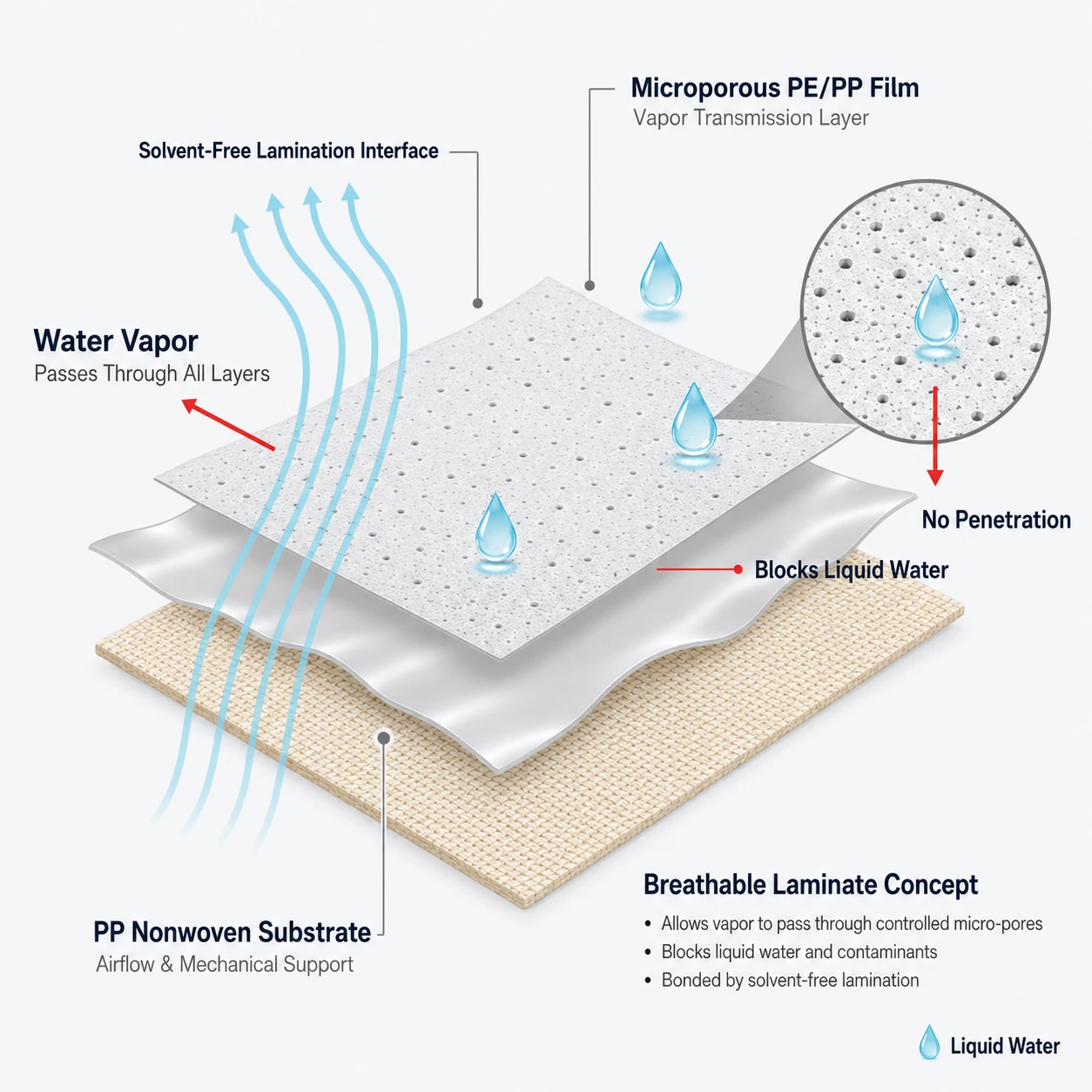
Breathable laminated films provide a controlled solution. Their microporous structure allows vapor and air to pass through at a designed rate while helping block liquid water and particles. This balance allows the product inside the package to remain active, stable, and safe during use.
How Breathable Desiccant Packaging Materials Are Designed
The performance of breathable packaging depends on the relationship between the film layer and the supporting substrate. Kae Hwa designs these materials as laminated structures rather than simple plastic sheets, allowing each layer to serve a specific function.
The breathable film layer is usually made from microporous PE or PP film. Through controlled pore formation, the film can allow moisture vapor and air to pass while reducing the risk of liquid penetration. The pore structure, film thickness, and polymer selection all influence the final water vapor transmission rate, also known as WVTR.
The nonwoven layer adds strength, softness, and process stability. It supports the film during slitting, lamination, pouch forming, and sealing. It also helps distribute airflow across the packaging surface, which is important for products that require consistent moisture absorption or odor control.
When the film and nonwoven are bonded together, the result is a functional laminate that combines breathability, durability, and converting compatibility. This structure can be adjusted for different package sizes, filling materials, storage conditions, and production methods.
Breathable Film Design for Desiccant Sachets and Moisture Absorber Packs
In desiccant sachets and moisture absorber packs, the key requirement is controlled vapor access. The packaging material must allow humidity to reach the absorbent material inside, but the rate must be carefully managed.
A breathable film with suitable WVTR helps prevent rapid saturation while still allowing effective moisture capture over time. This is especially important for products used in electronics, pharmaceuticals, precision components, apparel, footwear, and general consumer goods.
The laminate must also maintain physical integrity during filling and sealing. Powder leakage, weak seals, or uneven material strength can affect both product performance and customer experience. For this reason, Kae Hwa’s breathable packaging laminates are designed with both functional permeability and production stability in mind.
Breathable Packaging Materials for Deodorant and Odor-Control Packs
Deodorant packs and odor-control sachets often use activated carbon, zeolite, minerals, or other adsorbent materials to capture unwanted odors. These materials need access to air in order to work efficiently.
Breathable packaging allows odor molecules and vapor to pass through the laminate and reach the adsorbent material inside. At the same time, the structure helps contain the powder or granules and prevents direct exposure to external moisture or liquid.
The nonwoven layer plays an important role in this application. It helps create a more even air-contact surface, reducing the chance of localized saturation. This supports longer-lasting and more consistent deodorizing performance in closets, shoes, storage boxes, vehicles, and household products.
Controlled Airflow Materials for Hand Warmer Packaging
Hand warmers require a different kind of breathability. Instead of focusing only on moisture transmission, the packaging must regulate oxygen flow.
Most disposable hand warmers generate heat through an oxidation reaction. If the packaging material does not allow enough oxygen to enter, the heat output may be too low. If too much oxygen enters too quickly, the reaction may become unstable or finish too early.
A breathable laminate helps control this reaction by managing air permeability. It supports steady oxygen intake while maintaining package strength, powder containment, and user safety. This helps the hand warmer deliver a more stable warming effect throughout its intended usage period.
Material Safety and Sustainability Considerations
FunPack™ must be reliable not only in performance but also in safety and manufacturing responsibility. Kae Hwa develops breathable film laminates using PE and PP materials, which are widely used in packaging and industrial applications due to their chemical stability, processability, and versatility.
Depending on the application, the laminate structure can be designed with recyclable material options and solvent-free lamination processes. This helps reduce unnecessary emissions during production while supporting cleaner material design.
Performance can also be evaluated through recognized testing methods. WVTR can be tested using ASTM E96, while hydrostatic resistance can be evaluated using EN 20811. These measurements help confirm whether the material provides the required balance between vapor transmission and liquid resistance.
For brands developing desiccant wrappers, deodorant sachets, dehumidifier packs, or hand warmer packaging, this balance is essential for both product function and long-term quality.
Customizable Structures for Different Packaging Requirements
Different moisture-control products require different material properties. PackDry™ used for electronics prevents liquid and dust leakage while providing slower vapor transmission to extend service life. ThermoBreathe™ safely controls heat pack temperature by providing higher air permeability to support heat generation.
Kae Hwa can customize breathable packaging materials according to the customer’s product formulation and converting process. Available adjustments include:
- WVTR level and film thickness
- Basic weight and film type
- Nonwoven structure and surface texture
- Color and printability
- Roll width and sealing compatibility
Materials can be supplied as single-layer breathable films, two-layer laminates, or multi-layer composites depending on the final application. This flexibility allows customers to match the material to automated packaging lines, sachet dimensions, sealing methods, and end-use environments.
Work with Kae Hwa for Moisture-Control Packaging Solutions
Desiccant packaging materials must support the active function of the product inside. Whether the goal is moisture absorption, odor control, oxygen regulation, or long-term storage protection, the packaging material must provide the right balance between breathability and barrier performance.
With experience in breathable film production, nonwoven lamination, and functional material customization, Kae Hwa provides material solutions for desiccant sachets, deodorant packs, dehumidifier bags, fragrance packs, and hand warmer packaging.