Why Lamination Quality Matters in Waterproof Breathable Laminates
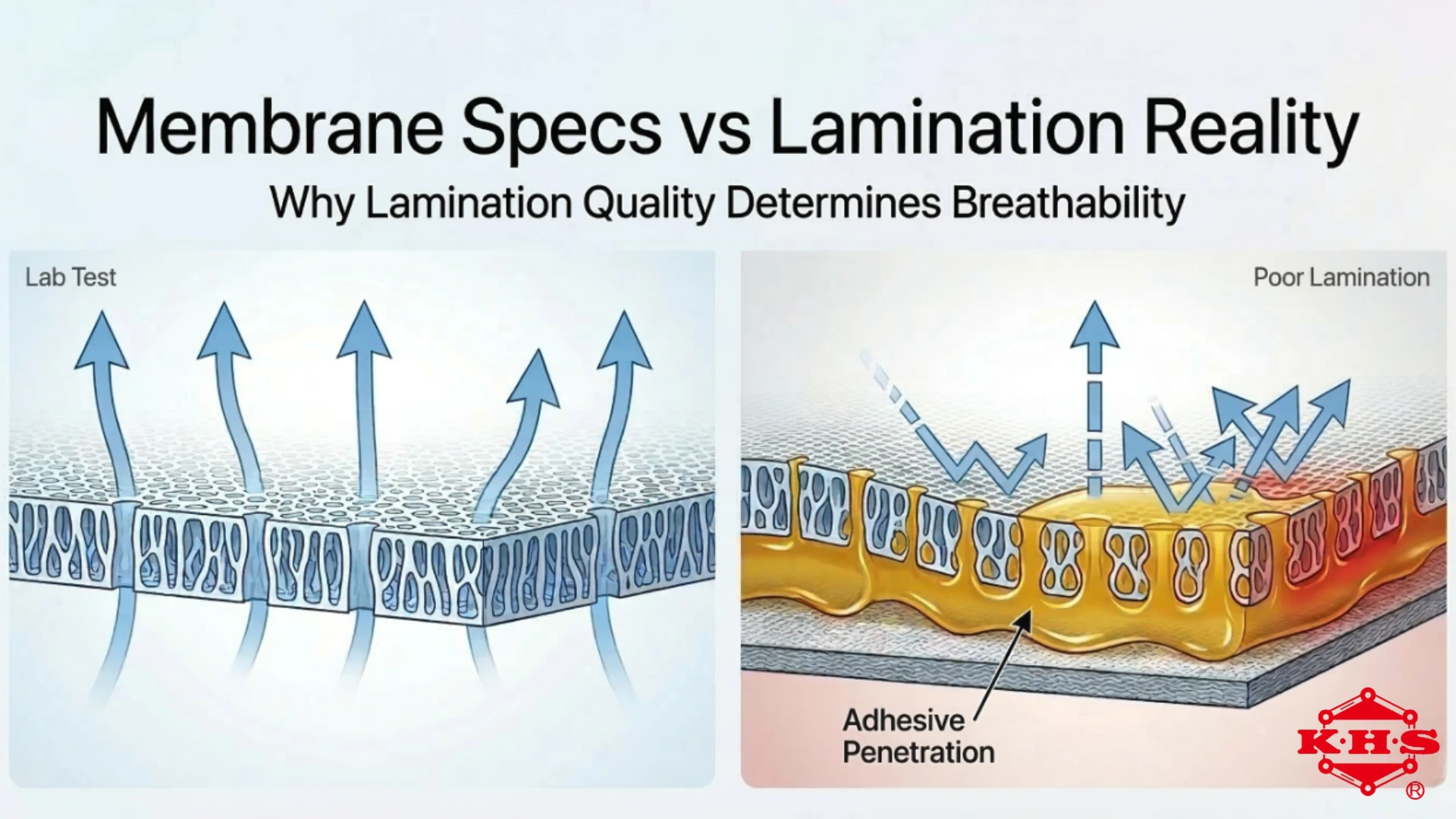
When procuring waterproof breathable textiles for medical PPE, outdoor apparel, or industrial gear, B2B buyers understandably focus intensely on data sheets. While metrics like Moisture Vapor Transmission Rate (MVTR) and hydrostatic resistance are heavily weighted, judging a membrane by its standalone specs only tells half the story. The ultimate factor that guarantees a functional fabric’s reliability in the field comes down to the assembly phase—specifically, the lamination quality.
The Lamination Factor: Why Standalone Specs Aren’t Enough
Procurement teams and product designers often base purchasing decisions solely on breathable film specifications, overlooking a crucial variable: lamination quality.
The Problem with Traditional Offline Processes Applying conventional adhesives through outdated offline lamination blocks micropores, causing a significant drop in the Moisture Vapor Transmission Rate (MVTR) once the membrane is integrated into a garment. Furthermore, this process introduces thermal stress and uneven mechanical tension, degrading both the hydrostatic resistance and structural integrity of the fabric.
The In-Line Lamination Advantage Advanced in-line lamination solves this flaw by bonding the freshly cast membrane directly to the substrate in a single, seamless step.
- Maximized Performance: Preserves original breathability and improves dimensional stability without the need for reheating.
- Cost & Energy Efficient: Eliminates intermediate storage, significantly reducing energy consumption and production costs.
- The Bottom Line: Delivering high-performance waterproof textiles requires assembly precision that matches your polymer chemistry.
The Spec Sheet Trap: Why Is Relying on Standalone MVTR Misleading?
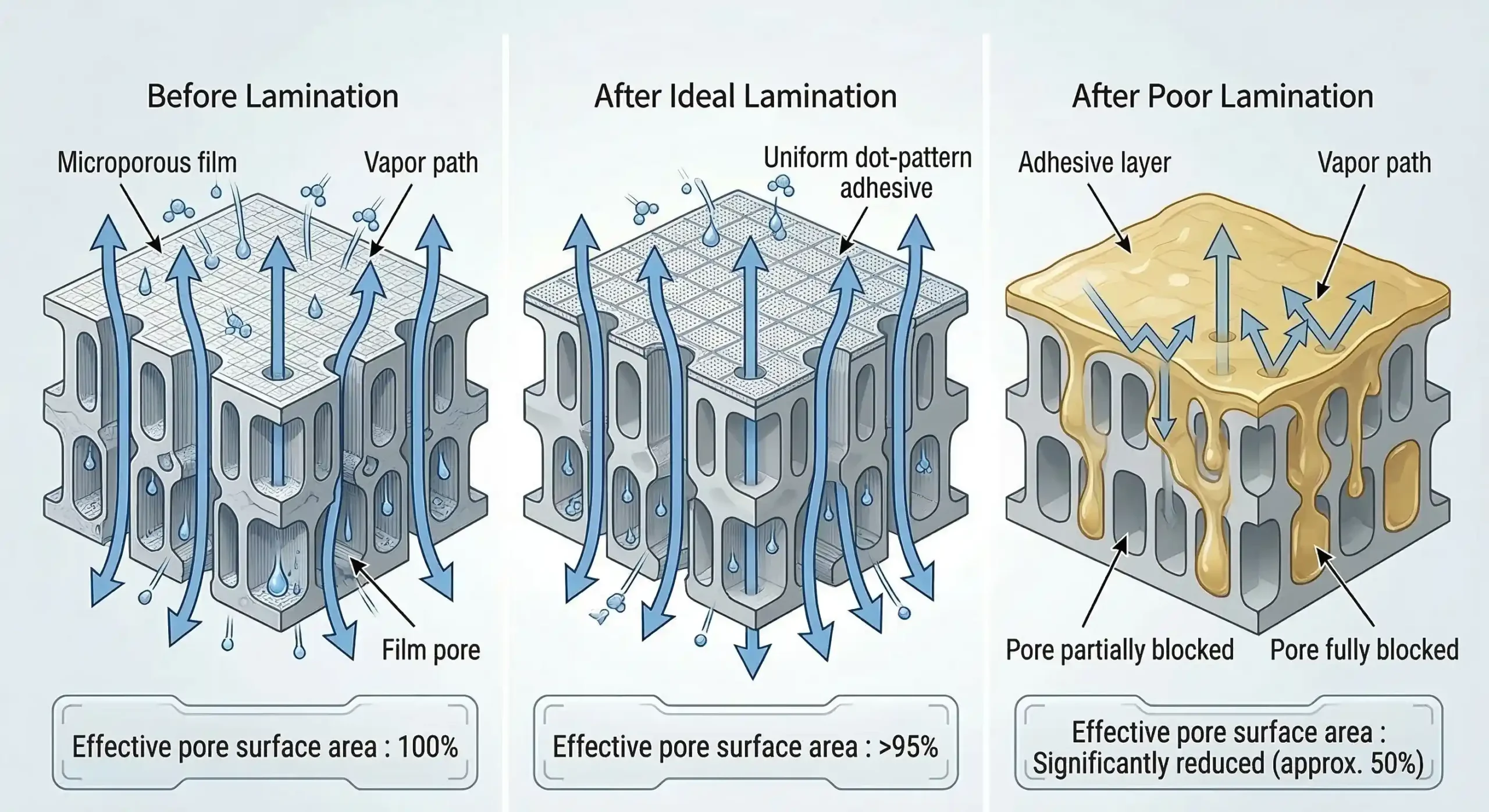
When you specify a membrane with a top-tier Moisture Vapor Transmission Rate (MVTR), you naturally expect exceptional breathability in your final product. Yet, textile manufacturing often reveals a harsher reality. The “MVTR Illusion” emerges during the bonding phase, where transitioning a raw film into a durable composite can severely compromise its performance.
Applying heavy, conventional adhesives to substrates physically obstructs the microscopic pathways crucial for vapor release. Consequently, breathability plummets—no matter how stellar the standalone film scored on standardized lab tests like ASTM E96 or JIS L1099. For B2B manufacturers, this creates a costly disconnect: paying a premium for high-end films, only to deliver garments that leave users trapped in moisture. Since the end-user only experiences the finished composite’s performance, your lamination technique isn’t just an assembly step; it is the make-or-break factor in product development.
The Power of Process Engineering: Discover Kae Hwa’s In-Line Lamination Advantage
Compromised breathability and degraded hydrostatic resistance are industry-wide flaws that demand a process engineering revolution. Kae Hwa delivers the solution by enhancing the casting process with advanced in-line lamination technology.
- The Traditional Flaw (Offline): Standard methods require cast films to be rolled, stored, unwound, and reheated before bonding with a substrate.
- The Kae Hwa Advantage (In-Line): Our integrated system allows the freshly cast membrane to be bonded directly to nonwovens or fabrics in real time, entirely eliminating the need for rewinding or reheating.
- Optimized Performance: By skipping the disruptive cooling, storing, and reheating stages, the polymer stays in its perfect, optimal state.
This real-time lamination approach drastically reduces handling time, eliminates intermediate storage, and ensures unwavering quality from the initial film to the final fabric.
Behind the Production: Overcoming Thermal and Mechanical Risks
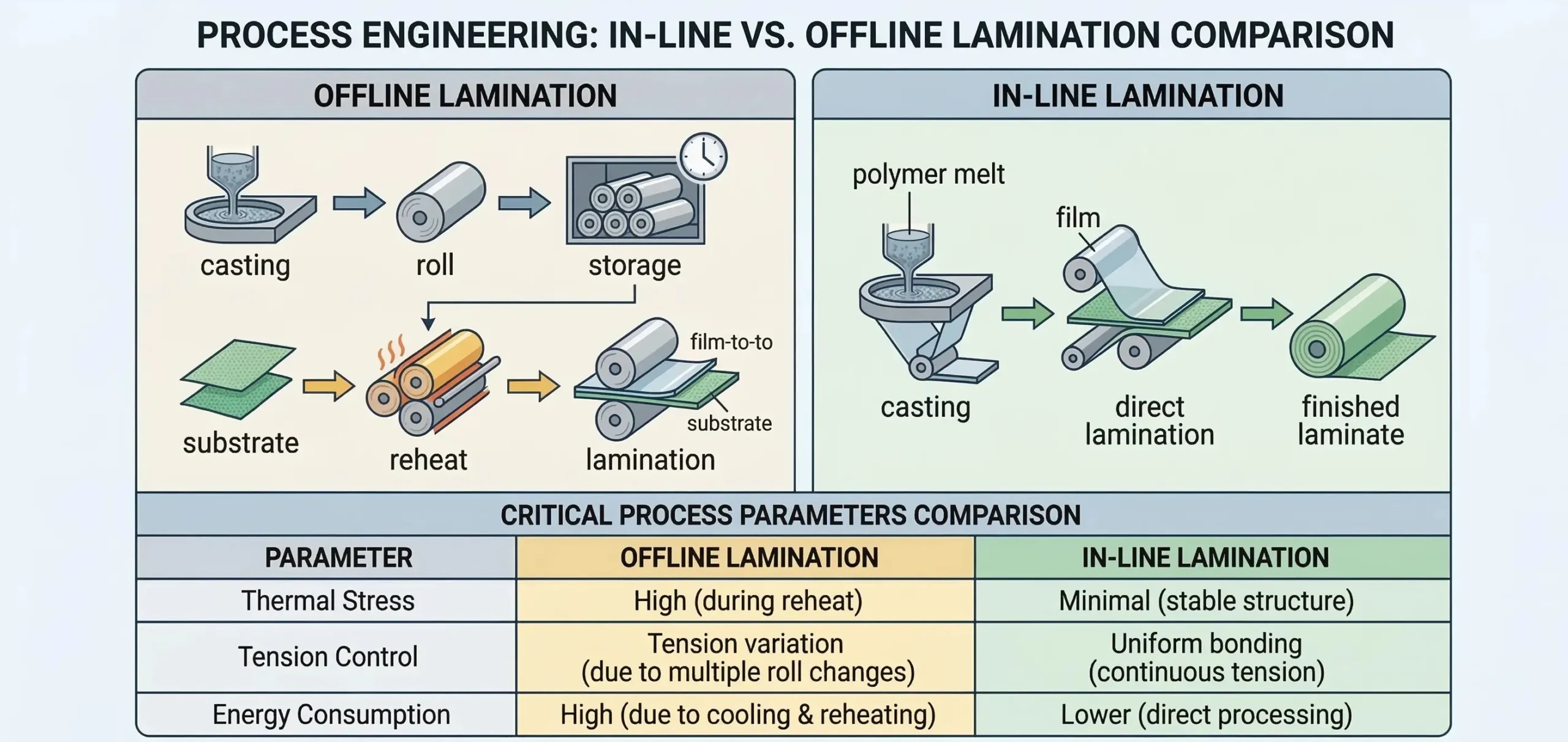
The Hidden Dangers of Offline Processing Subjecting micron-thin membranes to repeated thermal and mechanical cycles carries significant risks. Offline methods require reheating the film for adhesives (causing thermal stress) and unwinding/rewinding it (creating uneven mechanical tension). This combination leads to unnatural stretching and micro-tears, which distort the microporous structure and result in waterproofing failure and inconsistent breathability.
The Kae Hwa Engineering Advantage Instead of using disjointed assembly steps, our casting film technology leverages continuous temperature calibration and strict process controls to deliver superior results:
- Precision Manufacturing: We maintain a consistent ±0.01 mm thickness tolerance, setting a flawless baseline for advanced lamination. See why this tolerance improves reliability.
- Locked-In Integrity: Immediate in-line bonding secures the film’s uniform pore structure right after forming, neutralizing environmental and mechanical stressors before they cause damage.
- Superior Durability: The final product boasts stronger adhesion and exceptional dimensional stability, seamlessly maintaining its form under varying pressures and temperatures.
Addressing Key B2B Hurdles: Cost-Efficiency, Durability, and Regulatory Compliance
For procurement directors and production managers, supply chain reliability and cost-efficiency are absolute priorities. Subpar lamination doesn’t merely compromise a textile’s performance; it triggers soaring defect rates, excessive scrap, and costly customer returns. By implementing advanced in-line lamination, Kae Hwa effectively resolves these primary B2B pain points.
First, the process guarantees enhanced durability by delivering superior lamination strength and uniformity, actively preventing delamination even under harsh end-use conditions or rigorous industrial washing. Second, it drives exceptional cost and operational efficiency. The continuous nature of the line shortens the production cycle and boosts productivity while significantly reducing energy consumption and overall manufacturing costs. Finally, it ensures uncompromising regulatory compliance. Because global brands demand stringent quality control, Kae Hwa’s facilities operate under rigorous ISO 9001 and ISO 14001 certified systems. This robust foundation empowers your final products to seamlessly meet relevant international standards, including CE, AAMI, ASTM, and EN specifications.
Kae Hwa CertificationAchieving Specification Integrity Through Eco-Conscious Processes
Modern manufacturing demands a balance between product excellence and environmental responsibility. Unlike conventional lamination that relies on toxic, VOC-emitting solvent adhesives, Kae Hwa embeds sustainability directly into its production DNA:
- Solvent-Free Safety: Our advanced in-line bonding process is 100% solvent-free. This ensures a cleaner manufacturing footprint and safer final products across medical gowns, ProShell™ outdoor jackets, and AgriGuard™ covers.
- Built for the Circular Economy: Our technology enables a fully recyclable composite design, significantly reducing environmental impact from the ground up.
- Certified ESG Compliance: Supported by strict GRS (Global Recycle Standard) and ISO 14064-1 carbon verifications, we ensure your brand delivers top-tier performance without ever sacrificing your Environmental, Social, and Governance targets.
Your Partner in Manufacturing Excellence
Protect Your Specs. Preserve Your Performance.
When evaluating waterproof breathable textiles, membrane specifications are only the starting point. The real challenge is ensuring that those specifications remain stable after lamination, conversion, and real-world use.
At Kae Hwa, we believe lamination quality should support the material’s original performance — not compromise it. Through precision casting technology and seamless in-line lamination, we help manufacturers better understand how film structure, bonding control, and process stability work together to shape the final fabric.
For brands and manufacturers exploring waterproof breathable materials, Kae Hwa provides technical insight, material experience, and flexible development support across medical PPE, outdoor apparel, industrial protection, and functional textile applications.
To learn more about how lamination quality affects final fabric performance, explore Kae Hwa’s waterproof breathable membrane and lamination technologies, or contact our team for material guidance.