
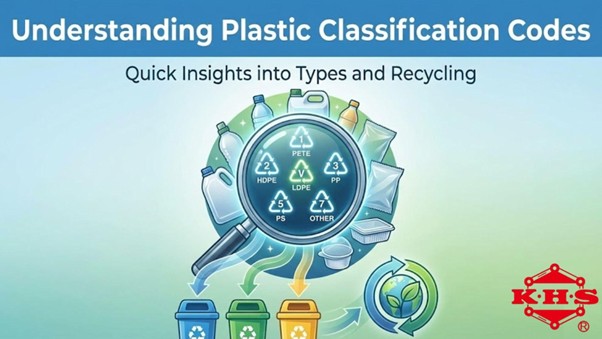
Plastics are categorized by resin identification codes—numbers ranging from 1 to 7—that indicate the polymer type and its recyclability.
Recognizing these codes helps consumers, manufacturers, and recyclers correctly identify materials, improving both waste management and sustainability.
Below is a quick overview of the seven main plastic categories, their features, and common applications.
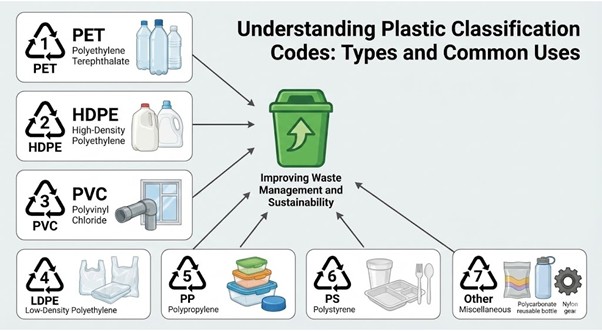
1. PET – Polyethylene Terephthalate
A clear, strong, and lightweight plastic.
Common Uses: Beverage bottles, food containers, and packaging films.
Key Traits: Excellent transparency, moisture resistance, and recyclability.
Recycling Tip: Widely recycled; best suited for single-use bottles and textiles (polyester fibers).
2. HDPE – High-Density Polyethylene
A dense and durable polymer used for rigid containers.
Common Uses: Detergent bottles, milk jugs, pipes, and grocery bags.
Key Traits: High impact strength, chemical resistance, and long service life.
Recycling Tip: Commonly recycled into piping, outdoor furniture, and storage containers.
3. PVC – Polyvinyl Chloride
A versatile material available in both rigid and flexible forms.
Common Uses: Water pipes, cable insulation, window frames, and flooring.
Key Traits: Flame retardant and durable, but may release harmful compounds during production or burning.
Recycling Tip: Recycled cautiously due to chemical additives; often reused in construction materials.
4. LDPE – Low-Density Polyethylene
A soft, flexible material often used for films and lightweight bags.
Common Uses: Plastic wraps, grocery bags, and squeezable bottles.
Key Traits: Flexible, transparent, and resistant to impact and moisture.
Recycling Tip: Collected in specialized recycling streams; often repurposed into bin liners or shipping envelopes.
5. PP – Polypropylene
A highly versatile and resilient plastic used in a variety of industries.
Common Uses: Food containers, automotive parts, caps, and fibers.
Key Traits: Strong, lightweight, and resistant to chemicals and fatigue.
Recycling Tip: Increasingly recycled; used for automotive components, fibers, and reusable containers.
6. PS – Polystyrene
A rigid plastic that can also be foamed for lightweight applications.
Common Uses: Disposable cups, trays, cutlery, and packaging inserts.
Key Traits: Clear and formable but brittle; provides thermal insulation in foam form.
Recycling Tip: Less frequently recycled due to cost; alternatives are encouraged where possible.
7. Other – Miscellaneous Plastics
Includes all plastics not covered by codes 1–6, such as polycarbonate (PC), nylon, and bioplastics.
Common Uses: Multi-layer packaging, electronic components, reusable water bottles.
Key Traits: Vary widely in strength, flexibility, and recyclability.
Recycling Tip: Requires specialized sorting and processes; often not accepted in standard recycling programs.
Why Plastic Classification Matters
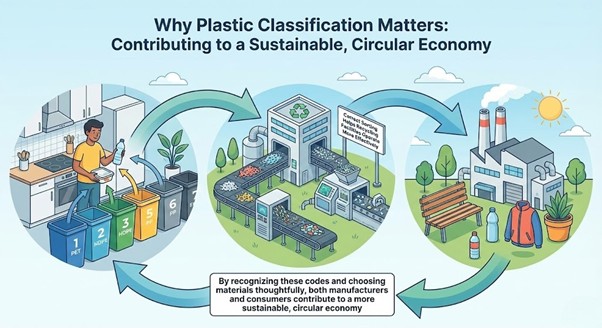
Understanding plastic types is key to improving recycling efficiency and reducing environmental impact.
Different polymers behave differently during processing and reuse, so sorting them correctly helps recycling facilities operate more effectively.
By recognizing these codes and choosing materials thoughtfully, both manufacturers and consumers contribute to a more sustainable, circular economy—where plastics can be recovered and repurposed rather than wasted.