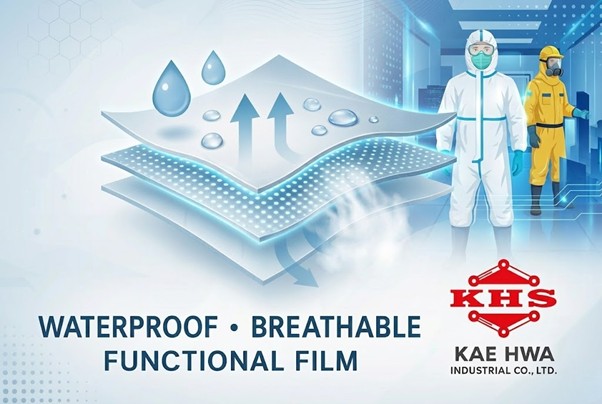
When a raindrop lands on a fabric without penetrating, yet heat silently escapes from within, it isn’t magic—it is precise material engineering. This balance is the defining challenge of modern performance fabrics.
At Kae Hwa Industrial, we view waterproofing and breathability not as opposing forces, but as interdependent functions. From medical protective fabrics engineered to meet viral barrier standards to building wraps that must vent vapor our mission is to perfect this equilibrium using advanced polymer science. We don’t just manufacture membranes; we engineer reliable safety distances between the user and the environment.
The Physics of Failure: Why “Just Waterproof” Isn’t Enough
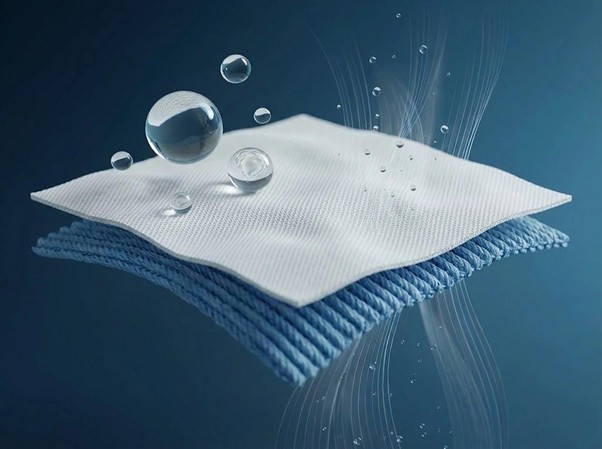
A common misconception in procurement is that a barrier only needs to block external liquids. However, ignoring breathability (moisture vapor transmission) leads to critical failures across applications:
- In Construction & Equipment: Trapped moisture is a silent destroyer. If vapor cannot escape from wall cavities or under equipment covers, condensation forms when temperatures drop. This leads to structural rot, corrosion, and mold growth.
- In Medical & Hygiene: The human body constantly emits heat and moisture. An impermeable barrier (like a standard plastic bag) creates a “greenhouse effect,” leading to heat stress for surgeons or dermatitis for diaper wearers.
Our technology solves this by integrating Microporous (MicroBreath™) or Monolithic (AquaVene™) structures. These allow gas molecules to pass through while maintaining a robust shield against liquid water and biological contaminants, where applicable.
Decoding the Standards: How We Verify Performance
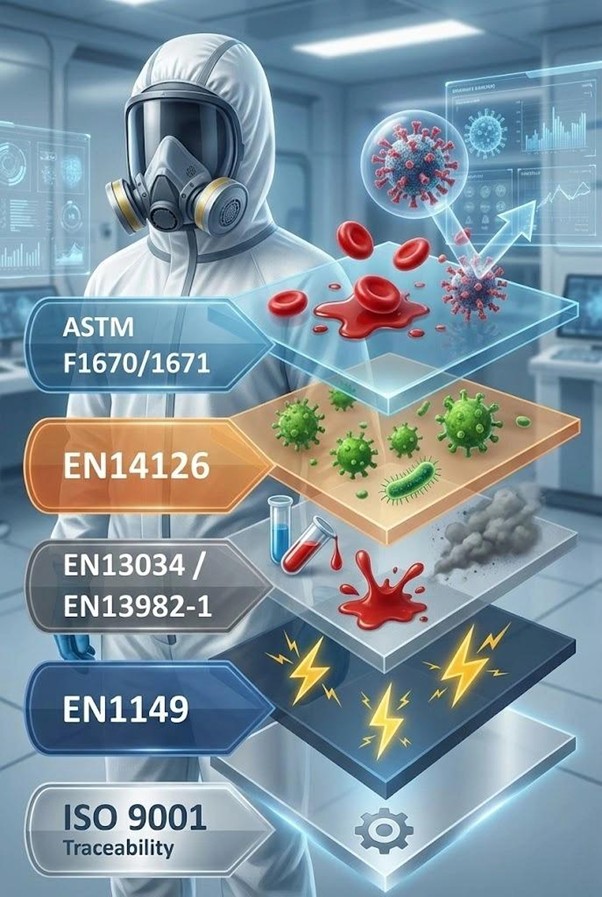
In high-stakes industries, “trust” must be quantified. We validate our materials against relevant international benchmarks, based on their intended applications to ensure compliance for our global partners:
- Medical Viral Barrier (ASTM F1670 / F1671): The gold standard for healthcare. It verifies that designated medical protective fabrics resist penetration by blood-borne pathogens and bacteriophages under hydrostatic pressure.
- Infective Agent Protection (EN 14126): Critical for the European market, this standard certifies protective clothing against biological hazards.
- Chemical & Dust Safety (EN 13034 / EN 13982-1): Ensures our industrial fabrics effectively shield workers from liquid chemical splashes (Type 6) and hazardous dry particulates (Type 5).
- Traceable Quality (ISO 9001): We maintain a fully traceable manufacturing process, ensuring that the performance you test in the lab is the performance you receive on the production line.
Data-Driven Manufacturing: No Assumptions
A material’s value cannot be judged by touch alone. Kae Hwa operates on a principle of Quantitative Validation:
- Tailored Formulations: We do not offer generic solutions. We select the membrane type (microporous vs. monolithic) and adjust the MVTR and Tensile Strength based on your specific application data.
- Continuous Optimization: Our R&D process is iterative. Every test result feeds back into our formulation logic, allowing us to refine film thickness and pore uniformity in response to evolving standards and customer requirements.
This commitment to data ensures that whether you are building a hospital wing or a protective suit, the material performs exactly as engineered.
(H2) Partner with Us: Access Technical Data and Custom Solutions
(CTA Content) Kae Hwa believes in transparency. We gladly share detailed technical information and third-party test reports to support your product development. Whether you need materials for medical protection, industrial safety, or outdoor performance, we offer full OEM/ODM customization—from precise film selection to wide-width slitting.
👉 Click to explore our products and watch our testing videos
Frequently Asked Questions (FAQ)
-
- Q1: How do your materials distinguish between water and vapor? A: We utilize two primary mechanisms. Microporous membranes feature nano-scale pores that are smaller than liquid water droplets but larger than water vapor molecules. Monolithic membranes use a solid, hydrophilic polymer structure to transport moisture chemically via molecular diffusion.
- Q2: What is the practical difference between ASTM F1671 and EN 14126? A: While both relate to biological protection, ASTM F1671 is a specific test method using a viral surrogate (bacteriophage) to check for penetration. EN 14126 is a broader European standard for protective clothing that includes multiple tests, such as resistance to contaminated liquids and aerosols.
- Q3: Can you customize the membrane for specific climates? A: Yes. We can adjust the Moisture Vapor Transmission Rate (MVTR) and hydrostatic head. For example, we can engineer higher breathability for tropical climates (to reduce heat stress) or higher water resistance for extreme weather protection.
- Q4: Which industries rely on these technologies?A: Our membranes are the core technology behind Medical PPE (gowns, coveralls), Industrial Safety (chemical suits), Hygiene Products (diapers), Construction (roofing underlayments), and Outdoor Apparel.