Decoding the Polymer: How to Select the Ideal Film for Your Application
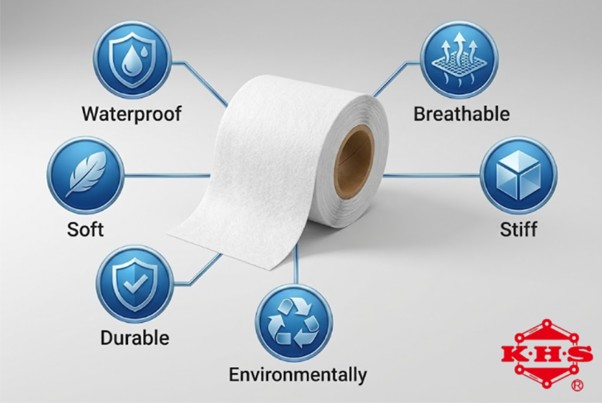
In the engineering of high-performance products—whether for a surgical theater, a construction site, or a nursery—the choice of film substrate dictates the outcome. It determines the product’s lifespan, environmental footprint, and user comfort.
At Kae Hwa Industrial, we offer the industry’s three primary functional polymers: PE (Polyethylene), PP (Polypropylene), and TPEE (Thermoplastic Polyester Elastomer). While all three utilize our precision Casting Film Technology to deliver waterproofing and breathability, their mechanical behaviors differ significantly.
Understanding these nuances is key to optimizing your product’s performance.
1. PE Film (Polyethylene): The Soft, Economic Standard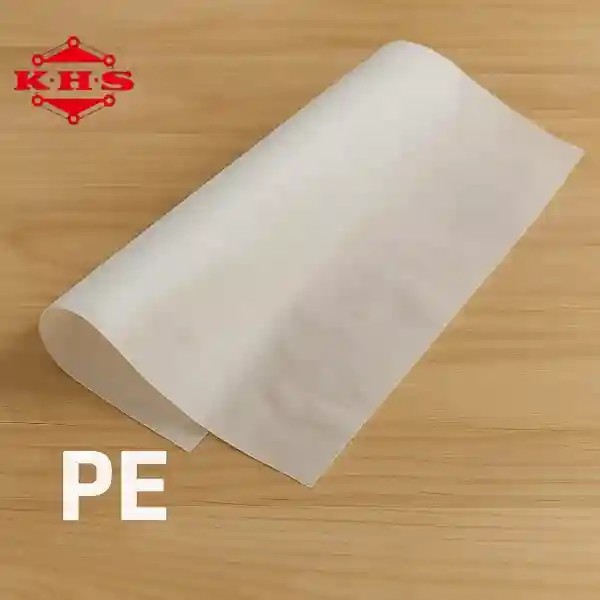
PE is the workhorse of the hygiene and basic construction industries. It offers the most cost-effective balance of waterproofing and softness.
-
- Performance Profile:
- Structure: Microporous (breathable via filler-induced pores).
- Texture: Excellent flexibility and soft hand-feel (“cotton-like” touch).
- Limitations: Lower thermal resistance and chemical stability compared to PP or TPEE.
- Ideal Applications:
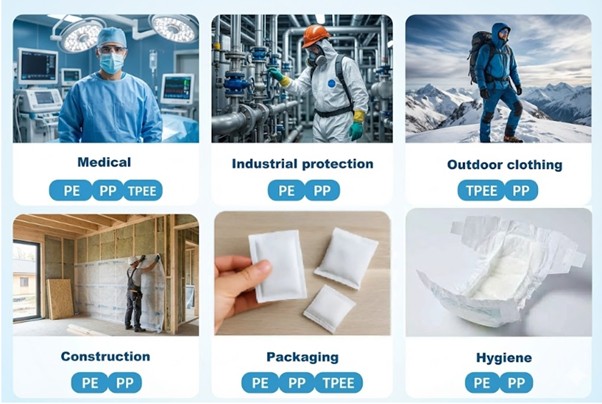
- Hygiene: Backsheets for baby diapers and sanitary pads where skin comfort is paramount.
- Basic Construction: Wooden frame moisture barriers.
- Packaging: Waterproof layers for desiccants and warm packs.
- The Verdict: Choose PE for high-volume, single-use products where cost-efficiency and softness are the primary drivers.
- Performance Profile:
2. PP Film (Polypropylene): The High-Performance Specialist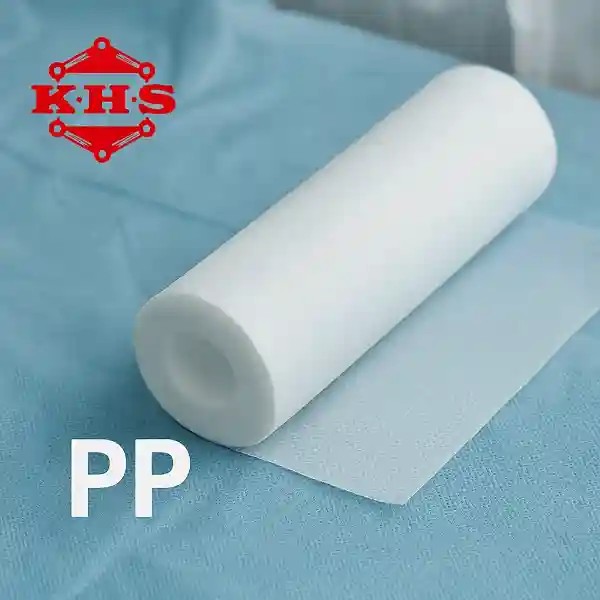
When the application demands higher durability, thermal stability, or a smoother surface for lamination, PP is the superior choice.
- Performance Profile:
- Structure: Microporous non-filler technology. Unlike standard PE, our PP offers a cleaner, more uniform pore structure.
- Surface: Exceptionally smooth, making it ideal for precise In-Line Lamination with nonwovens or woven textiles.
- Resistance: Higher heat resistance and enhanced barrier performance in designated medical protective structures, compared to basic films.
- Ideal Applications:
- Medical Protection: Isolation gowns and drapes requiring a balance of breathability and viral barrier.
- Functional Apparel: Lightweight rainwear and workwear.
- Industrial: Roofing underlays requiring dimensional stability.
- The Verdict: Choose PP for medical and technical textile applications where uniformity, strength, and lamination compatibility are critical.
3. TPEE Film (Elastomer): The Sustainable, High-End Solution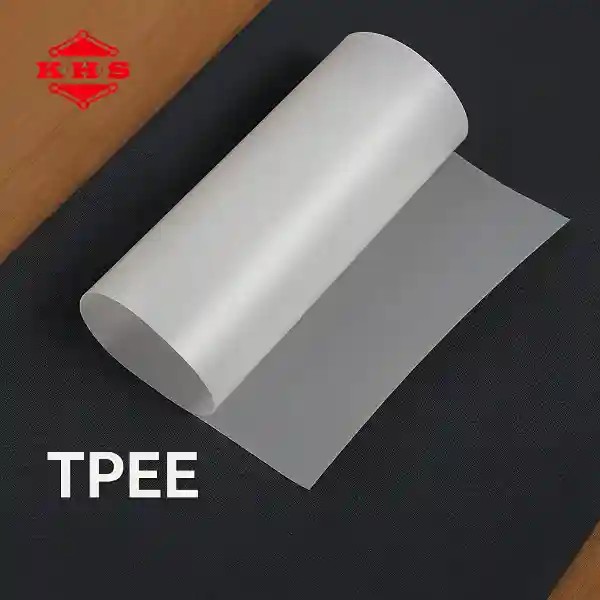
TPEE represents the pinnacle of performance and sustainability. It is unique because it is a Monolithic (non-porous) membrane that breathes through chemical diffusion rather than physical pores.
-
- Performance Profile:
- Structure: Solid, monolithic barrier. It is 100% waterproof and airtight (blocking wind and viruses) while allowing high MVTR (Moisture Vapor Transmission Rate).
- Mechanicals: Highly elastic, durable, and quiet (rustle-free).
- Sustainability: When laminated with polyester (PET) fabrics, it enables mono-material compatibility within polyester-based recycling concepts, supporting circular economy goals.
- Ideal Applications:
- High-End Medical: Reusable or premium surgical gowns (AAMI Level 4 compliant).
- Outdoor Performance: Stretchable sportswear, waterproof gloves, and softshell jackets.
- The Verdict: Choose TPEE for premium performance and circular design projects requiring elasticity and absolute liquid/viral barriers.
- Performance Profile:
At a Glance: Material Comparison
| Feature | PE (Polyethylene) | PP (Polypropylene) | TPEE (Elastomer) |
| Breathability Mechanism | Microporous | Microporous | Monolithic (Diffusion) |
| Waterproofness | High | High | Extreme |
| Elasticity | Low | Low | High |
| Heat Resistance | Low | High | High |
| Recyclability | Standard | Standard | High (Mono-material) |
| Cost | Economic | Mid-Range | Premium |
Partner with Material Experts
Selecting the right film is just the first step. Kae Hwa offers full OEM/ODM support, including embossing, multi-color printing, and custom lamination to tailor these materials to your exact specifications.
Ready to test the difference?
👉 Contact our technical team to request a material sample kit featuring PE, PP, and TPEE swatches.
Frequently Asked Questions (FAQ)
Q1: Which material provides the best viral protection?A: While all provide liquid barriers, TPEE (Monolithic) and High-Performance PP are best suited for critical medical applications. TPEE’s solid structure offers a complete physical barrier against viruses, while our specialized PP films are engineered to pass ASTM F1671 standards.
Q2: Can I recycle these films?A: Yes. However, TPEE offers a distinct advantage in the textile industry. Because TPEE is polyester-based, it can be laminated with PET fabrics to create a 100% polyester garment, simplifying the recycling process (Mono-Material Recycling).
Q3: Can these films be printed on?A: Absolutely. All three materials support our 4-Color Printing Technology. We can print branding or patterns directly onto the film without compromising its waterproof or breathable properties.
Q4: Why is TPEE called “Monolithic”?A: “Monolithic” means the film is a solid, continuous sheet with no physical holes. Instead of letting vapor pass through pores (like PE/PP), TPEE uses a hydrophilic chemical process to absorb moisture from the skin side and push it to the outside, making it extremely durable and windproof.